Singapore does something no other major casino destination does. It limits itself, by law, to exactly two casinos: Marina Bay Sands and Resorts World Sentosa. This is a policy choice rather than an accident of the market, and it shapes everything about gambling here, from the standard of the venues to the rules at the door.

The detail most visitors have heard about, and worry about, is the Singapore casino entry fee. Here is the reassuring part first: if you are not a Singapore citizen or permanent resident, you walk into both casinos free with your passport. The S$150 levy that gets talked about applies only to citizens and PRs. For an international visitor, entry costs nothing.

Casino.com approaches Singapore from the floor rather than the travel desk. This Singapore casino guide covers the choice between the two venues, what the gaming is actually like at each, how the levy works for the people it does apply to, the games that give you the best odds, and the country’s unusually thorough responsible gambling framework. It is written for someone planning a visit, not reading a brochure.

Here is the practical picture before the detail.

DetailAt a glance
Number of casinosTwo: Marina Bay Sands (MBS) and Resorts World Sentosa (RWS). No others are permitted by law
Entry, non-residentsFree. Anyone who is not a Singapore citizen or PR enters both casinos with a passport
Entry levy, citizens and PRsS$150 per 24 hours, or S$3,000 for an annual pass. Paid separately at each casino
Minimum age21, strictly enforced with ID checks
Open hoursBoth casinos open 24 hours, 7 days a week
Dress codeSmart casual. No slippers, shorts or sleeveless shirts on the gaming floor
PhotographyBanned on the gaming floor at both casinos
Credit gamblingNot permitted. Cash, NETS or debit cards only
CurrencySingapore dollar (S$)
RegulatorGambling Regulatory Authority (GRA)
Getting to MBSBayfront MRT, directly connected to the resort
Getting to RWSHarbourfront MRT, then the Sentosa Express monorail
Complimentary drinksServed on the MBS gaming floor. RWS policy not publicly confirmed (confirm on site)

A note on the figures above: the levy rates are current at the time of writing, but it is always worth confirming the latest details on the casino’s own site before a visit.

Marina Bay Sands Versus Resorts World Sentosa

With only two casinos to choose between, the decision is refreshingly simple, and far less involved than in most of the casino destinations we cover. It comes down to what kind of trip you are taking, because the two venues sit at opposite ends of the island and offer quite different experiences.

Marina Bay Sands, the Central One

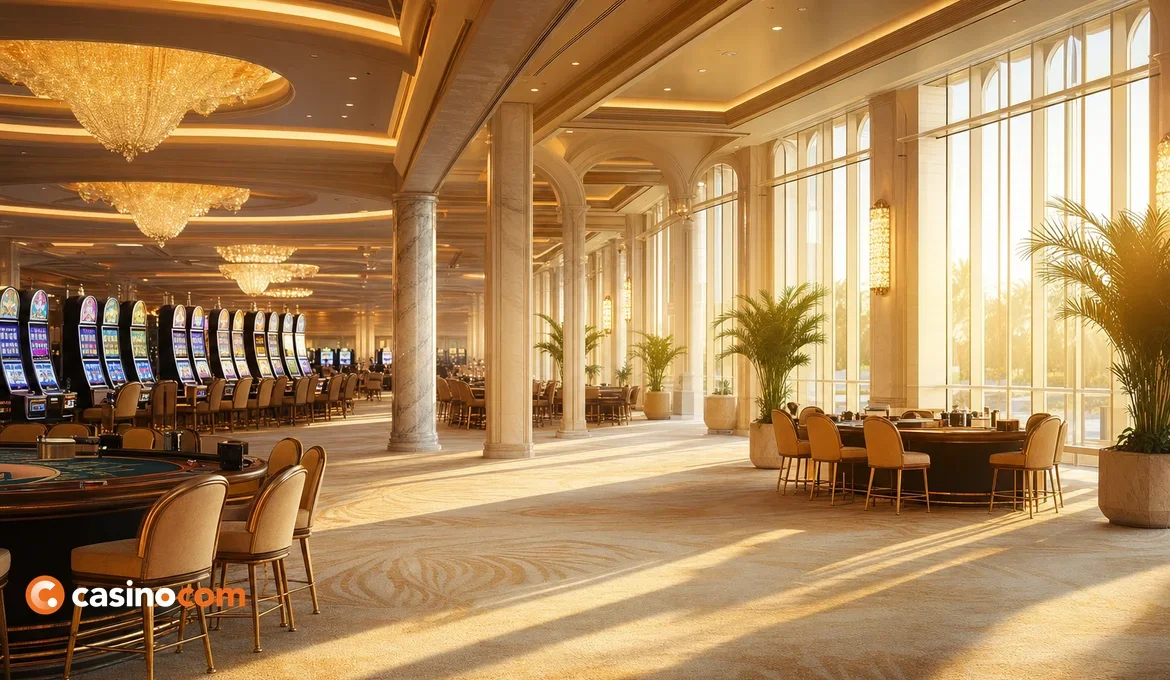
The Marina Bay Sands casino occupies the podium beneath the famous three-tower resort on the downtown waterfront, with the gaming spread across four levels: roughly 600 table games and up to 3,000 electronic gaming machines. The 57th-floor SkyPark and its infinity pool are among the most photographed sights in Asia. It is centrally located, directly connected to Bayfront MRT, and generally regarded as the stronger of the two for the gaming experience itself. Complimentary drinks are served on the gaming floor.

Resorts World Sentosa, the Resort One

The Resorts World Sentosa casino sits on Sentosa Island, reached by the Sentosa Express monorail or by road, and forms one part of a sprawling resort that also holds Universal Studios Singapore, the S.E.A. Aquarium and Adventure Cove Waterpark. The atmosphere on the floor is more relaxed than at MBS. RWS is partway through a major redevelopment, so it is fully operational in 2026 with some areas still being reworked, building towards a larger and more polished version later this decade.

Which One Should You Choose?

If you are here mainly to gamble, the Marina Bay Sands casino has the edge on atmosphere and the more central location. If you are travelling with family or want a full resort with attractions beyond the floor, the Resorts World Sentosa casino makes more sense as part of a Sentosa day. If you want both, doing both in a single trip is entirely realistic, since they serve different moods rather than competing directly. As an honest read for 2026, the Marina Bay Sands casino is the stronger gaming destination today, while RWS is mid-transformation and is worth it for the wider resort experience.

The Entry Levy, Explained for Both Sides

The levy is Singapore’s most distinctive feature and its most misunderstood one, so it is worth being precise. It serves two very different groups of people, and which group you fall into changes everything.

If you are not a Singapore citizen or permanent resident, entry to both casinos is free. You present your passport at the entrance and walk in, with no levy and no charge, whatever your nationality or however long you are staying. This includes foreigners living in Singapore on a work pass, such as an Employment Pass or S Pass, along with Student Pass and Dependant Pass holders, as long as they are not PRs. The levy is about residency status, not about being a tourist.

Singapore citizens and PRs do pay. The Singapore casino entry fee for residents is S$150 for a 24-hour period, with the clock starting when you enter rather than running by calendar day, or S$3,000 for an annual pass. Citizens pay whether they live in Singapore or abroad, and the annual pass works out cheaper for anyone visiting more than about 20 times a year. The levies are non-refundable, and paying at one casino does not cover the other, so a resident visiting both pays at each.

The reasoning behind the system is deliberate social policy. Tourists bring spending the economy welcomes, while casual local gambling carries social risk, so the levy is designed to make residents pause before gambling on impulse while keeping the casinos attractive to visitors. It is enforced rigorously, with facial recognition at the entrances, and residents who try to enter without a valid levy are turned away at the door. Two groups are barred automatically and free of charge: undischarged bankrupts and people on certain government financial-assistance schemes, a restriction checked against official records rather than left to the casino.

The Gaming Experience at Both Casinos

Both casinos draw heavily on the games that dominate across Asia, with a few that will be less familiar to Western visitors. Knowing which bets are worth making is where a little preparation pays off directly.

Baccarat is the centre of gravity at both venues, as it is across the region. The banker bet carries a house edge of about 1.06 percent, one of the best bets anywhere on the floor, while the tie bet, at roughly 14 percent, is one of the worst, so it is best left alone. A short read on how baccarat works will leave you well prepared before you sit down.

Sic Bo is the other Asian staple, a dice game played at both casinos in which you bet on the outcome of three dice thrown together. It is hugely popular across the region, including in Macau, but unfamiliar to many Western players, and the range of bets, from simple big-or-small wagers to specific triples, carries widely different odds. It is worth learning the better-value bets before playing rather than scattering chips across the table.

Blackjack and roulette are available at both casinos, generally with European-style rules. Understanding basic blackjack strategy matters here, because the house edge swings sharply on how well you play your hand.

For roulette, both venues run the wheel, and knowing how European roulette differs from the American version is worth a moment, since the single-zero wheel gives you noticeably better odds. The MBS casino also carries up to 3,000 electronic gaming machines across four levels, a large and varied selection by any standard.

Poker rooms operate at both casinos, and the standard of play is serious, with a high proportion of professional and semi-professional players, so it is not the casual tourist environment you might find in a London cardroom.

Both venues also run high-limit and VIP areas with much higher minimums and separate access, while the main floor carries lower-stakes tables that suit recreational players, so there is room for most budgets. One rule applies everywhere: credit gambling is prohibited by law, so all play is with cash, NETS or a debit card. If you are used to casinos that extend credit lines, that does not happen here, so come with cash.

Insider Tips Most Guides Miss

A little local knowledge changes a Singapore casino visit from a quick look to a proper evening. These are the things worth knowing before you go.

  • Non-residents enter free, so use it. The S$150 levy is for citizens and PRs only. As an overseas visitor you walk in with your passport and no entry budget. If you are travelling with a Singaporean or PR, they pay, which is worth factoring into group plans.
  • Photography is seriously off-limits. Both casinos enforce a strict no-photos rule on the gaming floor, and phones out at the tables draw immediate attention from security. Save the camera for the hotel lobby, Gardens by the Bay near MBS, or the Sentosa resort areas.
  • The SkyPark is not free. The MBS rooftop infinity pool is for hotel guests only. Day visitors can pay for the SkyPark Observation Deck instead, so factor that in if the iconic view is on your list, or book a night at the hotel. Confirm the current ticket price on site.
  • Time your visit. Both casinos are busiest on weekend evenings and public holidays. Weekday mornings and afternoons are quietest, with more table availability and more attentive service, and since the floors never close you have the run of the clock.
  • Bring cash. There are ATMs inside both casinos, but queues build, so it is easier to arrive with enough cash. NETS is widely accepted if you hold a Singapore bank account, and cards work at the cashier desks, though not for direct play.
  • Plan the journey to RWS. The Marina Bay Sands casino is quick to reach, a short walk from Bayfront MRT. Getting to the Resorts World Sentosa casino takes more planning by way of the Sentosa Express, so allow 30 to 45 minutes each way from the city centre.

Singapore’s Responsible Gambling Framework

Singapore runs one of the most thorough problem-gambling frameworks in the world, and it reflects the same deliberate policy that limits the country to two casinos. The responsible gambling tools worth knowing about are easy to reach, and several features here go further than most countries.

  • The entry levy is itself a tool, since charging residents to enter is designed to curb impulsive local gambling.
  • Self-exclusion is available at both casinos and through the regulator.
  • Family exclusion orders let a relative apply to exclude someone they believe has a gambling problem, a formal legal mechanism rather than an informal request.
  • Automatic exclusions bar undischarged bankrupts and certain welfare recipients, checked against official records.

The National Council on Problem Gambling runs a helpline and counselling support, and operators must display this information prominently and offer pre-commitment tools.

Practical Guide: Before You Visit

A handful of practical details will make a first visit run smoothly.

  • Age and ID: the minimum age is 21 at both casinos, strictly enforced, and a valid passport or government photo ID is required at the entrance.
  • Entry: non-residents present a passport for free entry, while citizens and PRs pay the levy at the levy counter before the gaming floor.
  • Dress code: the Singapore casino dress code is smart casual on the gaming floor at both venues, so dark jeans and a collared shirt are reliable, while slippers, shorts and sleeveless shirts are not allowed. Jackets are not required. Lobby and non-gaming areas are more relaxed.
  • Money: the currency is the Singapore dollar. Both casinos have currency exchange and ATMs, and cards work at the cashier desks. There is no credit gambling, so all play needs cash, NETS or a debit card.
  • Getting to MBS: Bayfront MRT, on the Circle and Downtown Lines, is directly connected and the fastest route from anywhere in the city.
  • Getting to RWS: take the Sentosa Express monorail from Harbourfront, or a taxi straight to Resorts World Sentosa on the island.
  • Photography and bags: no photos on the gaming floor at either casino, and large bags are not allowed inside, so use the cloakroom before you enter.

Playing the Same Games Online

If a trip to Singapore is not on the cards, the Asian games that fill these floors are widely available online. Baccarat, blackjack, roulette and Sic Bo all appear at licensed online casinos, including live-dealer versions that put a real croupier on screen and recreate much of the table atmosphere. The single-zero European roulette and the low-edge banker bet in baccarat are the same online as on the floor, so the better-value bets travel with you. For players in regulated markets, the real money casino options are reviewed against the same standards we apply across these guides, which means weighing the licence a site holds, the fairness of its games and the strength of its player protections rather than the size of its sign-up offer.

Singapore Casino FAQ

  • Do tourists have to pay to enter casinos in Singapore?

    No. Anyone who is not a Singapore citizen or permanent resident enters both casinos free with a passport, whatever their nationality. This includes foreigners living in Singapore on a work, student or dependant pass, as long as they are not PRs. The S$150 levy that people have heard about applies only to citizens and permanent residents, so for an overseas visitor entry costs nothing.

  • How much is the Singapore casino entry levy?

    For Singapore citizens and permanent residents, the levy is S$150 for a 24-hour period or S$3,000 for an annual pass. The 24-hour clock starts when you enter, and the annual pass is cheaper for anyone visiting more than about 20 times a year. The levy is non-refundable, and paying at one casino does not cover the other. Non-residents do not pay it at all.

  • What is the minimum age to gamble in Singapore?

    The Singapore casino age limit is 21 at both Marina Bay Sands and Resorts World Sentosa, higher than the 18 required in London or Monte Carlo and the same as Las Vegas and Macau. ID checks at the entrance are strict, so carry a passport even if you are comfortably over the age limit.

  • Which is better, Marina Bay Sands or Resorts World Sentosa?

    For gaming and a central location, the Marina Bay Sands casino has the edge, and it is the easier of the two to reach. For a full resort with attractions beyond the floor, the Resorts World Sentosa casino works better as part of a Sentosa day with family. Many visitors do both in one trip, since they suit different moods rather than competing head to head.

  • Can you take photos inside Singapore casinos?

    No. Photography is banned on the gaming floor at both casinos and the rule is strictly enforced, with security stepping in quickly if phones come out at the tables. You can take photos freely in the hotel lobbies and the surrounding resort areas, such as Gardens by the Bay near MBS or the Sentosa attractions near RWS, just not on the floor itself.

  • What games can you play in Singapore casinos?

    Both casinos offer baccarat, which dominates, along with Sic Bo, blackjack, roulette, poker and thousands of electronic gaming machines. Baccarat’s banker bet is one of the best on the floor at around 1.06 percent, while the tie bet is one of the worst. Credit gambling is not permitted, so all play is with cash, NETS or a debit card.

  • Is it safe to gamble in Singapore?

    Yes, within the limits of any gambling. Both casinos are tightly regulated by the Gambling Regulatory Authority under the Casino Control Act, with strict standards, mandatory responsible gambling tools and one of the most thorough problem-gambling frameworks anywhere. Set a budget, treat it as entertainment, and the environment itself is among the more controlled in the world.

Jack Garry is a Los Angeles-based online casino writer and editor with five years of experience reviewing platforms, covering regulated gambling markets, and helping players make informed decisions. Raised in Las Vegas and steeped in casino culture from an early age, Jack brings a perspective to his writing that goes beyond the research.