


Cluster Pays Slots: How They Work and Which to Play
Discover the best cluster pays slots online. Learn how grid wins and cascade chains work, compare games by RTP and volatility, and find the right title.



The strategy I see most often is the "due a win" approach: a player watches a game, notes it has not paid recently, and sits down believing they are entering at the right moment. The RNG has no memory of that run. The game was equally likely to pay at any prior point. Pattern recognition in random sequences is instinct, not stupidity. But acting on it means choosing games based on history that has no bearing on future spin outcomes.

Bankroll management is not responsible gambling dressed up as strategy. It is the most practical expression of strategic thinking in slot play: making decisions rationally before you are emotionally invested in the outcome.
 Set your session budget before you open a game. Once it is gone, the session ends. This rule matters because mid-session budget decisions are made under a different emotional state than pre-session ones. Deciding the limit in advance removes the decision from the moment of loss.
Size your stake to allow at least 100 spins on your session budget. Below 100 spins on a high-volatility game, the probability of the session ending before a single bonus feature triggers is significant. At 200+ spins, most games will have produced at least one feature trigger. For the lowest available stake entry points, penny slots start from $0.05 per spin.
Set a stop-loss limit before spinning: a maximum loss beyond which you end the session regardless of how close a win feels. The point of a stop-loss is that it is non-negotiable. A stop-loss you can override is not a stop-loss; it is a suggestion.
Consider a win limit: a target profit at which you end the session. This sounds counterintuitive, but the most common session pattern is to win significantly early, continue playing without an exit trigger, and finish at near break-even or below. A pre-set win limit converts a good session into a locked result. It is an optional rule, but it is a strategic one.
The player who decides all four of these before opening a game is playing a fundamentally different strategy from the player who decides them as the session unfolds. The decisions are the same; the quality of them is not.
This section assumes you know what RTP and volatility mean. The focus here is on how to use them together as a decision framework, not what they are.

What players believe: a slot that has not paid out recently is cold and due a win; a slot paying frequently is hot and worth sticking with.
Why it is wrong: the RNG produces a new random result on every spin with no memory of previous outcomes. A slot that has not paid for 100 spins has exactly the same probability profile on spin 101 as it had on spin 1. What feels like a pattern is the human brain applying its natural pattern-detection instinct to a genuinely random sequence. The gambler's fallacy is a recognised cognitive bias, not a superstition unique to inexperienced players.
What to do instead: choose games based on RTP and volatility, a key decision you should understand when establishing how to play slots.

What players believe: slots pay more at certain times (late night, weekends, or when fewer players are online) because operators adjust payouts dynamically.
Why it is wrong: licensed operators are prohibited from adjusting RTP in real time. The certified RTP applies continuously, independent of time of day, day of week, or player volume. This prohibition is enforced by the licensing conditions of every major regulatory jurisdiction. The RNG does not know what time it is.
What to do instead: play when it suits your schedule. Time of day has no bearing on expected session outcomes.

What players believe: increasing stake mid-session improves the probability of triggering the bonus feature, because the game is programmed to pay more at higher stakes.
Why it is wrong: the RNG operates independently of stake level. The probability of any specific outcome on any spin is identical at $0.10 and at $10. What changes with stake is the absolute value of wins and losses, not the probability of any event occurring. The only genuine exception is where some providers offer a higher-RTP configuration at higher stakes: this is a different math model running, not the same model paying more.
What to do instead: set your stake based on bankroll management (session budget divided by 100 or more spins) before you start, and hold to it.

What players believe: after a significant win, the slot will under-perform for a period while it recoups the payout.
Why it is wrong: this is the same error as the hot/cold myth. The RNG has no memory of the previous win. The certified RTP is a long-run average across all players over millions of spins. One player's 500x win does not create a recovery debt the game must work off. The probability profile of every spin is unchanged by what came before.
What to do instead: after a significant win, decide whether to continue based on your pre-set win limit, not on the belief that the game now owes you less.

What players believe: manually clicking spin produces better outcomes than autoplay, either because the timing of the click affects the RNG or because casinos programme autoplay to pay less in order to encourage active engagement.
Why it is wrong: the RNG determines the outcome at the moment any spin initiates, whether through manual click or autoplay. The initiation method does not affect the output. Autoplay and manual play produce statistically identical results across any meaningful sample.
What to do instead: use autoplay when it helps you maintain consistent bet sizing and pace. It does not affect outcomes. What it can do is reduce the temptation to make impulsive stake changes during a losing run.
The myth that causes the most session damage is not the hot/cold machine belief; it is the conviction that raising your bet triggers the bonus. I have watched players double their stake on a losing run, exhaust their budget in half the expected time, and attribute it to bad luck rather than the stake increase. The RNG did not respond to the larger bet. The budget did. That is the actual outcome: shorter session, same result, more money lost.
Discover the best cluster pays slots online. Learn how grid wins and cascade chains work, compare games by RTP and volatility, and find the right title.

Find the slots with the highest RTP in 2026. Ranked by verified payout rate, with honest context on what RTP really means for your session.
Find the best low variance slots online. Longer sessions, strong RTPs, and high hit frequency. Compare top games and pick the right one for your budget.

Learn how online slots work from scratch. This slots guide covers RNG, paylines, RTP, volatility, paytables, and how to choose the right game.

Find the best classic slots online in 2026. Compare RTP, volatility and session length to pick the right game for your budget and goals.

Find the slots with the biggest max win potential in 2026. Ranked by verified multiplier, with honest context on what these figures mean for real sessions.

Find the best penny slots online in 2026. Low minimum bets, strong RTPs & genuine session value. Includes honest tips on making your budget go further.

What is Bonus Buy in slots? Is it worth the cost, and which games have the best bonus rounds to buy? Find honest answers in this guide for 2026.
Find the best high volatility slots for 2026. Compare RTP, max win potential, bonus mechanics, and learn to manage variance like an experienced player.

Learn how Megaways slots work, browse our top picks with up to 117,649 ways to win per spin, and find out what makes these games stand out.

Explore the most popular online slot themes in 2026 - from Egyptian and Greek mythology to fruit machines and fishing slots. Find your next favourite slot.

Learn about the different types of slot machines, from traditional and video slots to progressive jackpots and new 3D and VR games. Slots are among the most popular casino games — with so many styles to choose from, this guide explains how each type works and finds your best fit.
New to slot tournaments? This easy guide explains how they work, how to join, tips to win, and where to play—online, in casinos, or on a cruise. Slot tournaments are special events where players compete against each other on slot machines.

Learn how to play progressive slots and try top jackpot games for free. No signup, just spinning for a shot at the big one!

This is a full guide to different slot machine symbols so that you know what you're looking at when playing at online casinos. Slot machines have been around for the better part of a century. What started as a simple device with a pull lever has evolved into something.

Though some games have universal names, there are some areas of the world where differences arise. Some places call slot machines “pokies.” Full breakdown of Pokies explained Even those who don’t actively play them generally know about slot machines. What you may not have realized is that in Australia/New Zealand.

Learn why the return to player (RTP) percentage is critical for your success when playing online slots. Online slots are the undisputed king of casino games, with thousands of titles to choose from — but one part of playing that many overlook is RTP, a crucial number to understand.
Play free slots online with no deposit or registration needed. Try top slot games from leading providers and enjoy risk-free spins anytime.

Check out the Top 10 Play’n GO slot games. There’s rappers, undead pharaohs, and ancient explorers! Play’n GO are one of the largest entertainment providers in the world of slots and online gaming. They supply exciting slot games with fun themes, exciting background music, and varying bonuses and special features.
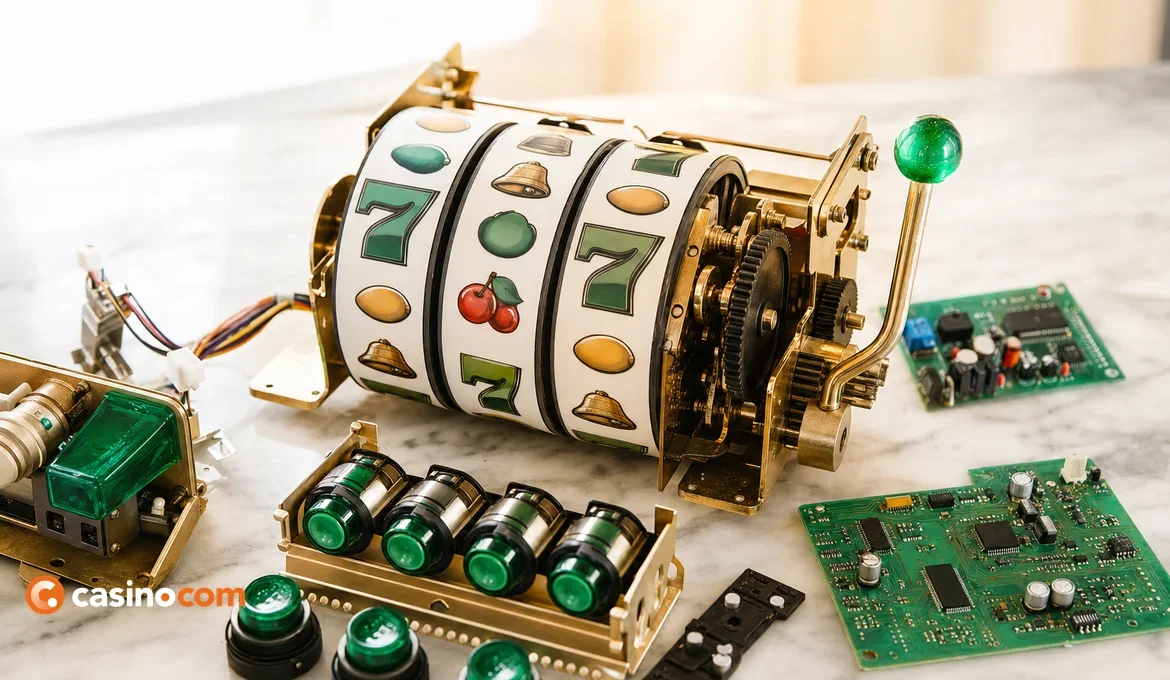
Have you ever wondered how slot machines are made? Find out how slots machines work and how they are manufactured. Slot machines were first invented in San Francisco by a car mechanic who was looking to provide entertainment for his customers as they were waiting for their cars to.
Wondering when that slot machine is going to give a big payout? We tell you how to know when a machine will hit. Depending on what kind of slot machine you play, the way it is triggered can vary. Some games need you to land on specific special symbols,.
What online slot should you choose to play? Variance or volatility is a factor that can make a big difference. Many slot players don’t understand just how important volatility of a game can be. We explain what it means. Too much choice can be a dangerous thing.

Have you ever wondered about the ? Read our guide on the evolution of slots history. Could you imagine the sights and sounds of the casino floor without the slot machine? Its flashing lights, ringing bells, and the enticing tingle of crashing coins make the experience whole.

Slots come with just as many special terms as any other game so we explain all the online slot game features out there. As with many other games, casino-based or otherwise, there can be a lot of terminologies involved with playing online slots.
Slots at any online casino come with an RTP. These can vary but what is the Return to Player and why does it matter? In this article we are going to take a look at an acronym that not enough casino players pay attention.