


Cluster Pays Slots: How They Work and Which to Play
Discover the best cluster pays slots online. Learn how grid wins and cascade chains work, compare games by RTP and volatility, and find the right title.



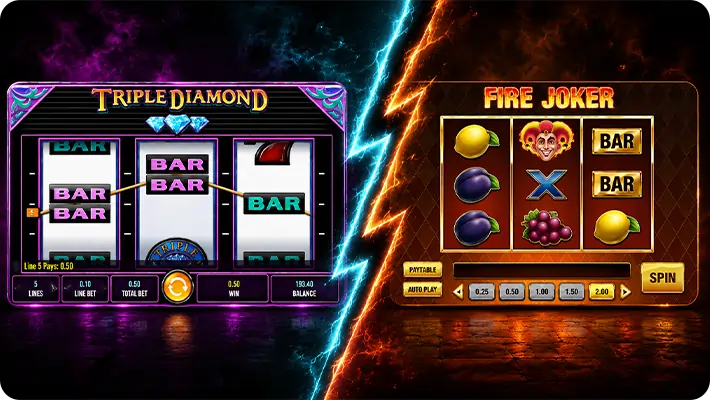
Three reels, a simple symbol set (fruit, bells, bars, 7s), and no complex mechanics. The format predates online casinos and mirrors the original mechanical slot machines. The simplicity is the point.
Classic slots typically run on 3 reels with 3–5 paylines. There is no free spins round, no cascading reels, and rarely a dedicated bonus feature. Every spin resolves immediately with no feature buildup, which keeps the session pace fast. They often carry stronger base RTPs than feature-heavy video slots, and most run at low volatility (small, frequent wins rather than big swings).
What you see on the reels is the entire game. There is no waiting for a bonus to trigger, no multi-stage feature to navigate, and no mechanic that requires understanding before you play. The rules fit on one screen. That makes classic slots a sensible starting point for first-time players who want to learn how slots work without noise, and they suit experienced players who want a fast, deliberately uncomplicated session - or anyone on a small budget where a single bonus trigger on a high-volatility game could wipe the bankroll before the feature lands.
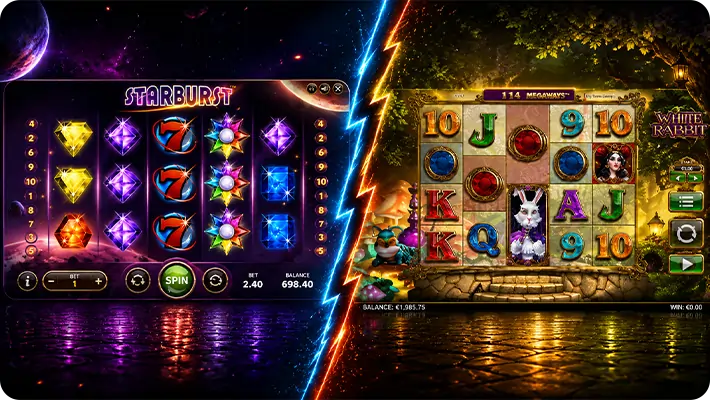
Five reels with theme-based visuals and a structured bonus system. This is the default format in any casino lobby and the category that covers the widest range of experiences, from low-variance games that pay something almost every spin to high-variance titles where the base game is just a runway to the bonus.
Most video slots use 10–50 fixed paylines, though ways-to-win systems are also common. Standard features include scatter-triggered free spins, expanding or sticky wilds, and multipliers. Volatility ranges widely across the category - the specific game determines the risk profile, not the format itself. Themes vary completely between titles, and mechanics often do too.
The free spins round is the defining feature of most video slots, and the quality, frequency, and mechanics of that round are what separate good titles from average ones.
Always check the paytable for how often the bonus triggers and what it does before committing real money. The format is flexible enough to suit any budget, volatility preference, or session length, which is why most players will find what they want here. If you are not sure what kind of slot you want to play, start in this category.
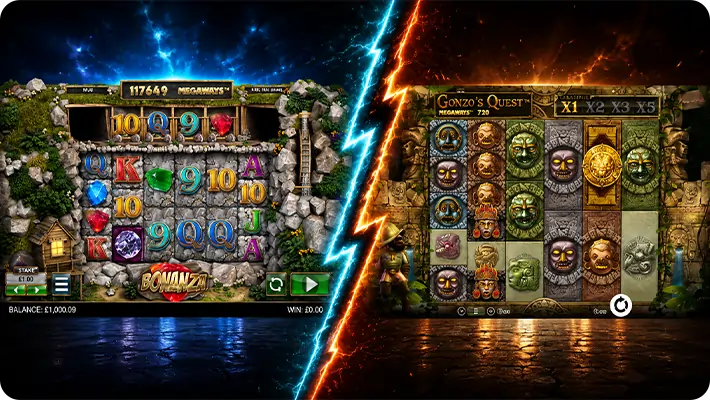
A licensed mechanic developed by Big Time Gaming where the number of symbols on each reel changes with every spin, producing a different number of ways to win on up to 117,649. Wins cascade: winning symbols are removed and new ones drop in from above, creating multiple win opportunities from a single spin.
Reel height varies per spin, so the win count is different on every spin rather than fixed by paylines. Each cascade can add a multiplier that grows throughout a single spin sequence. High volatility is standard across almost all Megaways titles, and bonus rounds are typically free spins with escalating multipliers - that is where the big wins come from, not from the base game. The trade-off is budget: 100+ base game spins before the bonus triggers is not unusual.
The base game can feel brutal. Long sequences of small wins or nothing at all are normal. Players who abandon the game after 30 losing spins convinced something is wrong are misreading the format - the variance is by design.
Megaways suits experienced players who understand high-volatility play, have a budget that can absorb extended cold runs, and are specifically targeting the large multiplier wins available in the free spins round. It does not suit small budgets or players who want regular feedback from the game.
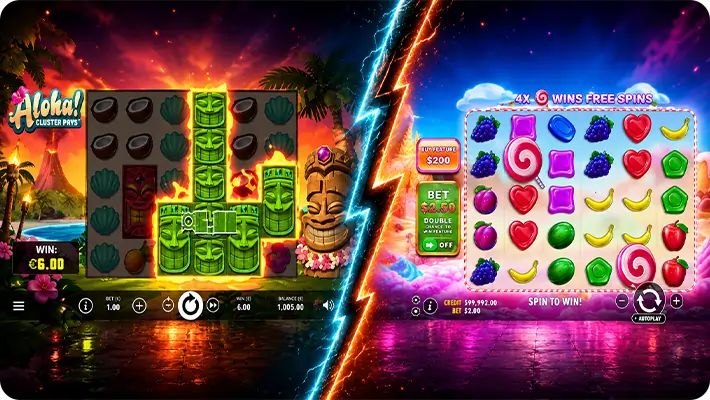
A grid-based format, typically 6×6 or 7×7, with no reels or paylines. Wins form when five or more matching symbols connect horizontally or vertically anywhere on the grid. Winning clusters are removed and new symbols fall in from above, creating cascading chain reactions from a single spin.
Wins come from connected groups of symbols rather than lines, and grid size varies by title - larger grids allow bigger cluster formations. Cascades create multiple win opportunities from one spin. Most cluster pays titles run at medium to high volatility, though some sit lower. Bonus rounds often involve modified cascade rules, locked symbols, or multiplier grids.
The format feels different from traditional reel slots. There are no lines to track, and wins can form anywhere across the grid simultaneously. Understanding which symbols are premium and how the cascade mechanic works in the specific game matters more here than in a standard payline slot. The category suits players comfortable with medium to high variance who want a format that feels visually distinct from traditional reels, and players who enjoy understanding a game's specific mechanic rather than just spinning and watching.

Standard video slots with an option to purchase immediate access to the bonus round, bypassing the base game entirely. The cost is typically 50–200× the current stake. The feature is not available in all jurisdictions - it is banned in the UK and several other regulated markets.
Players pay a fixed stake multiple to enter the bonus round immediately, skipping the variable number of base game spins normally required to trigger the feature organically. The bonus round result is effectively the entire session, since base game play is eliminated. Variance is high: the range of bonus round outcomes is wide. The purchase price is calibrated to reflect the expected value of the bonus, which means you are not buying a guaranteed win - you are buying entry to a high-variance event.
The bonus buy feature exists because organic bonus triggers on high-variance slots can take 150–300+ base game spins on average. For players who find the base game a mechanical step on the way to the bonus, the purchase skips directly to the part of the game they are actually playing for.
It suits experienced players who have already played a title in demo mode, understand exactly how the bonus mechanic works, and want to concentrate their session budget on the feature rather than grinding through the base game. It requires a clear-eyed view of variance: buying the bonus does not change the odds, it just changes when you encounter them.

A portion of every qualifying bet placed on the game, across every casino running it, feeds a shared jackpot pool. The jackpot grows continuously until one player wins it, at which point it resets to a seed value and begins climbing again. Networked progressives like Mega Moolah and Mega Fortune have paid jackpots worth tens of millions.
The base game plays like a standard video slot; the jackpot is a separate layer sitting on top. Base RTP is lower than non-progressive slots, typically 88–94%, because a portion of every bet is diverted to the jackpot pool rather than returned in base game wins. Jackpot triggers vary by title - some trigger randomly, others require a specific symbol combination or a secondary jackpot game - and multiple jackpot tiers (Mini, Major, Mega) are common, with the headline figure being the top tier.
The lower base RTP is the key trade-off that most players underestimate. In a standard session, a progressive jackpot slot will return less per spin than a comparable non-progressive game. The bet on the jackpot is real: it comes out of your expected return on every spin. The category suits players whose explicit goal is jackpot exposure and who understand the RTP trade-off - happy to accept lower base game returns for the chance at a life-changing win. It does not suit players focused on session value, RTP optimisation, or maximising time on the game.
Online slots use a shared vocabulary that appears across every game, review, and paytable you will encounter. Understanding these nine terms before your first session removes the guesswork: you will know what the numbers mean, why some games feel very different from others, and what to look for before you press spin.
 RTP (Return to Player): The percentage of all money wagered on a slot that the game returns to players over millions of spins. A 96% RTP slot returns $96 for every $100 wagered across its lifetime, not per session. Your individual result can vary widely in either direction. In practice: players often choose a 97% RTP game expecting to win more per session. That is not what RTP measures. It becomes meaningful over hundreds of spins, such as when clearing a wagering requirement, not in a 30-spin session.
 Volatility: How wins are distributed in a slot: their size and frequency. High volatility means wins land infrequently but tend to be larger. Low volatility means wins land more often but tend to be smaller. Medium sits between the two. In practice: on a high-volatility slot, 50 consecutive losing spins before a significant win is entirely normal. On a low-volatility slot, something lands every few spins, but each win is modest. RTP and volatility should be considered together, not separately. High-volatility slots require a larger budget to absorb the dry spells. Low-volatility slots suit smaller budgets and shorter sessions.
 Paylines: Lines across the reels on which matching symbols must land to produce a win. Modern slots have 10 to 100 fixed paylines or use ways-to-win systems. Practical note: a 20-payline game at $0.01 per line costs $0.20 per spin. Always check the total bet, not the bet per line.
 Wild symbol: Substitutes for any standard symbol to complete a winning combination, like a joker. Variants include expanding wilds (fill a whole reel), sticky wilds (stay for multiple spins), and multiplier wilds (multiply the win). There are more slot machine symbols worth knowing beyond these two.
 Scatter symbol: Triggers features when a minimum number land anywhere on the reels, regardless of payline position. Most slots require three or more Scatters to trigger Free Spins. Two Scatters typically pay nothing; the third anywhere triggers the feature.

Multiplier: A factor that increases a win. A 5x multiplier on a $1 win pays $5. Multipliers can apply to individual wins, total spin wins, or accumulate across a free spins round.
 Free spins: A set of spins at no additional cost, usually triggered by Scatter symbols. Free spins typically include enhanced mechanics: starting multipliers, additional wilds, or changed cascade rules. The specific free spins mechanic varies significantly between games; always check the paytable before playing.
 Bonus round: A separate game mode triggered by a specific condition, most commonly three or more Scatter symbols. Bonus rounds are not always free spins: some are pick-and-click games, others are hold-and-respin sequences or wheel-spin features.
 Hold and Win: Specific symbols (usually coins or cash values) land and lock in place, triggering a respin sequence. Locked symbols stay while other positions respin. The round ends when no new symbols lock or all positions are filled, paying the total of all locked values. Also called Respin or Lock and Spin.
The term most players think they understand but do not is volatility: specifically what "high volatility" feels like mid-session. Most players read it as "I might win a lot." What it means in practice is: you will lose, repeatedly, for longer than feels reasonable, before anything significant lands. I have watched players abandon a high-volatility game after 30 losing spins convinced it was broken. It was not broken. That is exactly what the game is designed to do.
The question most new players never ask is: how often does this game's bonus feature actually trigger? Not what it does -- everyone checks that. How many base game spins are required on average. I have seen players pick a game specifically for its bonus mechanic and spend an entire session never reaching it. The trigger frequency was once every 150 to 200 spins; their budget covered 80. That number is in the paytable and takes 10 seconds to find.
Discover the best cluster pays slots online. Learn how grid wins and cascade chains work, compare games by RTP and volatility, and find the right title.

Find the slots with the highest RTP in 2026. Ranked by verified payout rate, with honest context on what RTP really means for your session.
Find the best low variance slots online. Longer sessions, strong RTPs, and high hit frequency. Compare top games and pick the right one for your budget.

Learn what genuine slot strategy looks like: game selection, bankroll management, RTP tools, demo mode & how to avoid the myths that cost players money.

Find the best classic slots online in 2026. Compare RTP, volatility and session length to pick the right game for your budget and goals.

Find the slots with the biggest max win potential in 2026. Ranked by verified multiplier, with honest context on what these figures mean for real sessions.

Find the best penny slots online in 2026. Low minimum bets, strong RTPs & genuine session value. Includes honest tips on making your budget go further.

What is Bonus Buy in slots? Is it worth the cost, and which games have the best bonus rounds to buy? Find honest answers in this guide for 2026.
Find the best high volatility slots for 2026. Compare RTP, max win potential, bonus mechanics, and learn to manage variance like an experienced player.

Learn how Megaways slots work, browse our top picks with up to 117,649 ways to win per spin, and find out what makes these games stand out.

Explore the most popular online slot themes in 2026 - from Egyptian and Greek mythology to fruit machines and fishing slots. Find your next favourite slot.

Learn about the different types of slot machines, from traditional and video slots to progressive jackpots and new 3D and VR games. Slots are among the most popular casino games — with so many styles to choose from, this guide explains how each type works and finds your best fit.
New to slot tournaments? This easy guide explains how they work, how to join, tips to win, and where to play—online, in casinos, or on a cruise. Slot tournaments are special events where players compete against each other on slot machines.

Learn how to play progressive slots and try top jackpot games for free. No signup, just spinning for a shot at the big one!
This is a full guide to different slot machine symbols so that you know what you're looking at when playing at online casinos. Slot machines have been around for the better part of a century. What started as a simple device with a pull lever has evolved into something.

Though some games have universal names, there are some areas of the world where differences arise. Some places call slot machines “pokies.” Full breakdown of Pokies explained Even those who don’t actively play them generally know about slot machines. What you may not have realized is that in Australia/New Zealand.

Learn why the return to player (RTP) percentage is critical for your success when playing online slots. Online slots are the undisputed king of casino games, with thousands of titles to choose from — but one part of playing that many overlook is RTP, a crucial number to understand.
Play free slots online with no deposit or registration needed. Try top slot games from leading providers and enjoy risk-free spins anytime.

Check out the Top 10 Play’n GO slot games. There’s rappers, undead pharaohs, and ancient explorers! Play’n GO are one of the largest entertainment providers in the world of slots and online gaming. They supply exciting slot games with fun themes, exciting background music, and varying bonuses and special features.
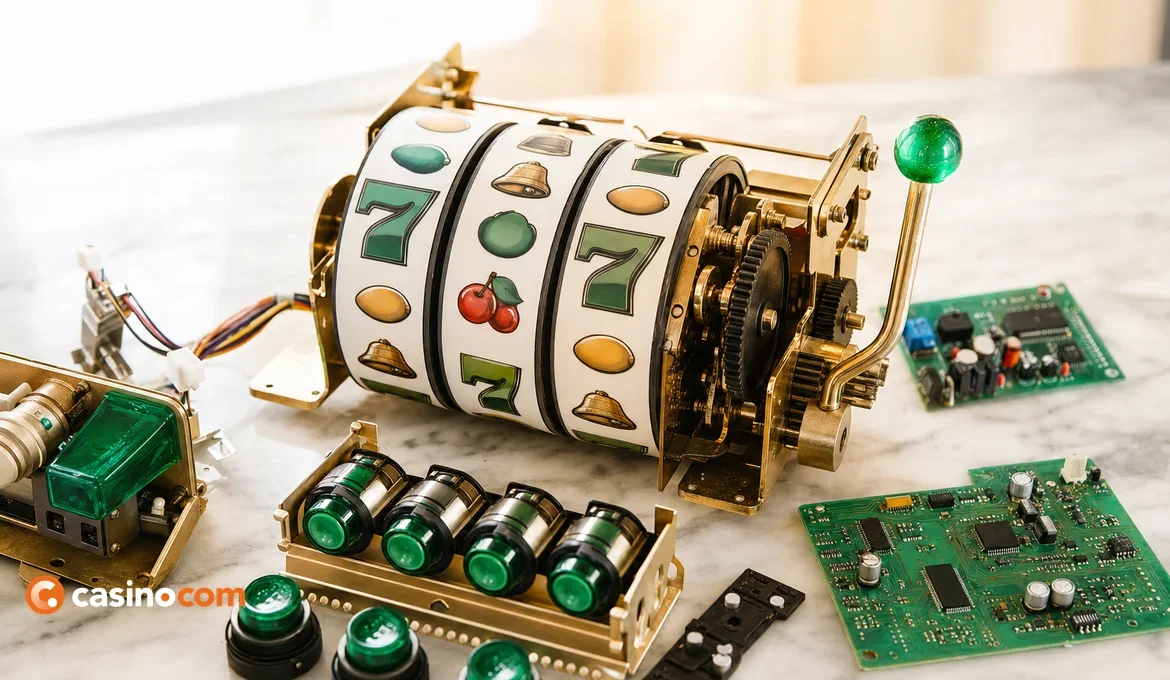
Have you ever wondered how slot machines are made? Find out how slots machines work and how they are manufactured. Slot machines were first invented in San Francisco by a car mechanic who was looking to provide entertainment for his customers as they were waiting for their cars to.

Wondering when that slot machine is going to give a big payout? We tell you how to know when a machine will hit. Depending on what kind of slot machine you play, the way it is triggered can vary. Some games need you to land on specific special symbols,.
What online slot should you choose to play? Variance or volatility is a factor that can make a big difference. Many slot players don’t understand just how important volatility of a game can be. We explain what it means. Too much choice can be a dangerous thing.

Have you ever wondered about the ? Read our guide on the evolution of slots history. Could you imagine the sights and sounds of the casino floor without the slot machine? Its flashing lights, ringing bells, and the enticing tingle of crashing coins make the experience whole.

Slots come with just as many special terms as any other game so we explain all the online slot game features out there. As with many other games, casino-based or otherwise, there can be a lot of terminologies involved with playing online slots.
Slots at any online casino come with an RTP. These can vary but what is the Return to Player and why does it matter? In this article we are going to take a look at an acronym that not enough casino players pay attention.