


Reactoonz




|
Game |
Provider |
RTP |
Volatility |
Max Win |
|
Reactoonz |
Play'n GO |
96.51% |
High |
4,570x |
|
Jammin' Jars |
Push Gaming |
96.83% |
High |
20,000x |
|
Gemix |
Play'n GO |
96.83% |
Medium |
4,513x |
|
Moon Princess |
Play'n GO |
96.50% |
High |
5,000x |
|
Aloha! Cluster Pays |
NetEnt |
96.42% |
Low-Med |
700xx |
|
Sticky Bees |
Pragmatic Play |
96.06% |
High |
10,000x |
|
Tome of Madness |
Play'n GO |
96.59% |
High |
2,000x |
|
Gemix 2 |
Play'n GO |
9626% |
High |
7,500x |
|
TNT Tumble |
Relax Gaming |
96.10% |
High |
12,278x |
|
Mahjong 88 |
Play'n GO |
96.62% |
High |
5,000x |

Reactoonz
Provider
Play'n GO
RTP
96.51%
Volatility
High
Max Win
4,570x

Jammin' Jars
Provider
Push Gaming
RTP
96.83%
Volatility
High
Max Win
20,000x

Gemix
Provider
Play'n GO
RTP
96.83%
Volatility
Medium
Max Win
4,513x

Moon Princess
Provider
Play'n GO
RTP
96.50%
Volatility
High
Max Win
5,000x

Aloha! Cluster Pays
Provider
NetEnt
RTP
96.42%
Volatility
Low-Med
Max Win
700xx

Sticky Bees
Provider
Pragmatic Play
RTP
96.06%
Volatility
High
Max Win
10,000x

Tome of Madness
Provider
Play'n GO
RTP
96.59%
Volatility
High
Max Win
2,000x

Gemix 2
Provider
Play'n GO
RTP
9626%
Volatility
High
Max Win
7,500x

TNT Tumble
Provider
Relax Gaming
RTP
96.10%
Volatility
High
Max Win
12,278x

Mahjong 88
Provider
Play'n GO
RTP
96.62%
Volatility
High
Max Win
5,000x
96.51%, High, 4,570x
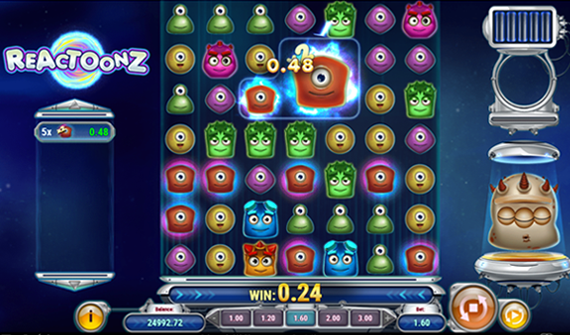
Reactoonz is the game that introduced most players to cluster pays. The 7x7 grid fills with alien creatures, and the Quantum Leap meter charges with each winning cluster.
When the meter fills, one of four bonus features activates: Gargantoon (a giant wild), Destabiliser (adds wilds), Demolisher (destroys lower-value symbols), or Implosion (creates wilds and destroys surrounding symbols).
Each activation resets the meter and can chain directly into the next cascade. The high volatility is real; base-game sessions can be quiet, but when the meter charges and chains, the result can be significant.
96.83%, High, 20,000x
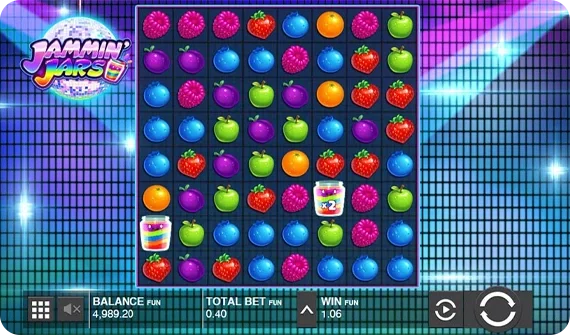
Jammin' Jars uses an 8x8 grid with a mechanic where a rainbow jar wild appears during cascades and moves one position toward the nearest cluster with each cascade, multiplying wins by its current multiplier value (which increases by 1x with each move).
The combination of large grid, high RTP, and the jar's escalating multiplier creates the highest max win on this list. Sessions are high-volatility but the 96.83% RTP provides more mathematical grounding than most high-variance games offer. A strong pick for players who want the full cluster pays experience alongside genuine upside.
96.83%, Medium, 4,513x
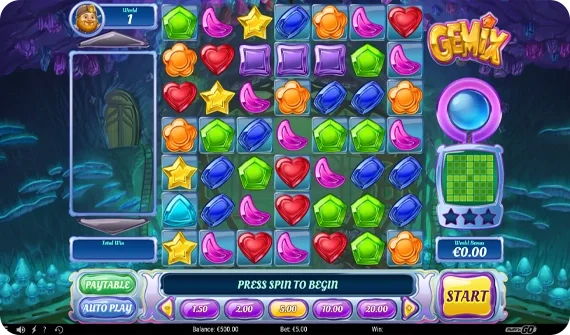
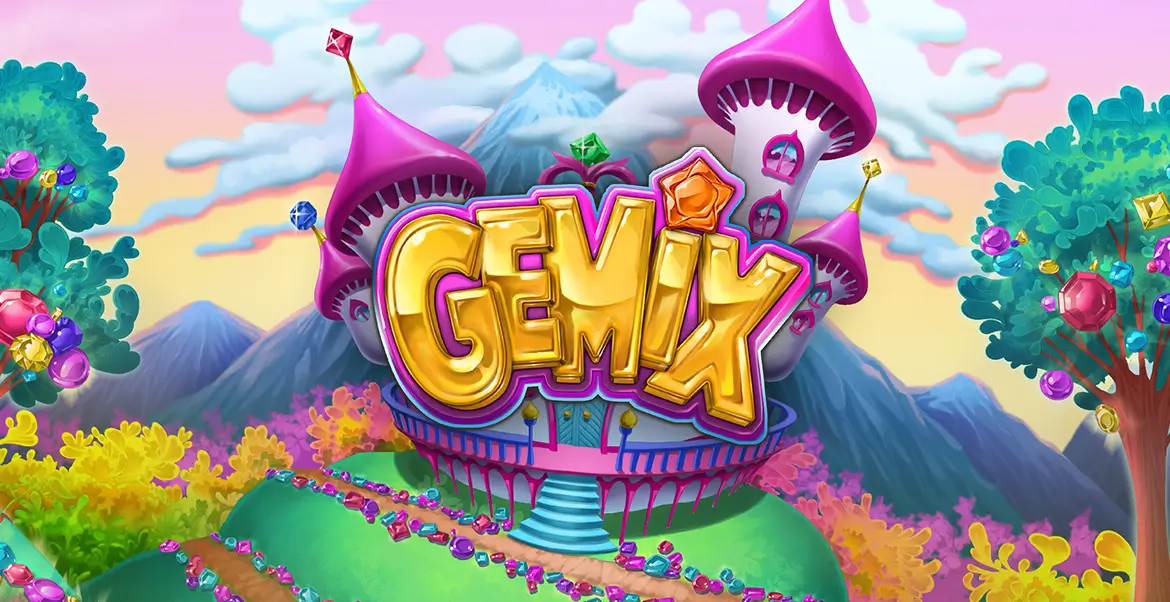
Gemix is the most accessible entry point for players new to cluster pays. The 7x7 grid uses coloured gems, and each match charges a Magic Meter through four stages. Stage four activates a full-board crystal blast that clears the grid and awards a large win.
Medium volatility means the meter charges with reasonable frequency. The combination of a high RTP, medium volatility, and a clear feature progression makes Gemix genuinely learnable in a way that higher-variance titles are not.
96.50%, High, 5,000x
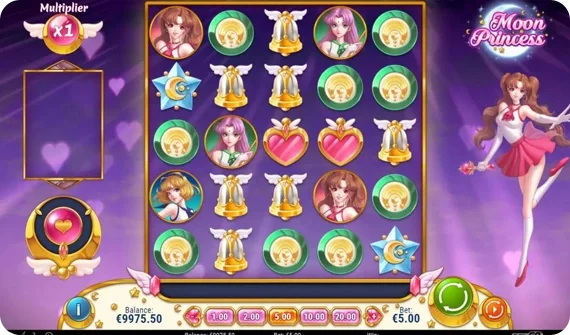
Three princesses occupy one column each on the 5x5 grid, and each charges a separate power meter. When a meter fills, the princess activates her ability: removing symbols, adding wilds, or multiplying wins.
Fill all three and Trinity Mode activates, wiping the board and triggering free spins with an escalating multiplier. The triple-meter structure creates more frequent feature triggers than a single-meter equivalent, keeping the game engaging during the base game despite its high volatility.
96.42%, Low-Med, 700x
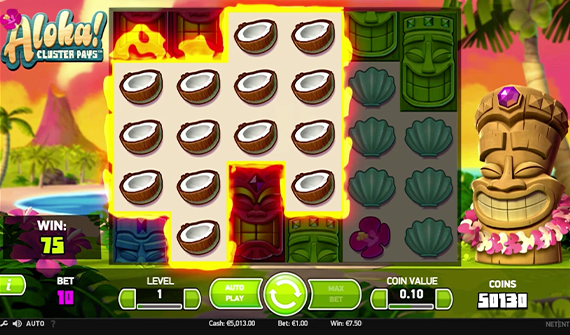
The game that started the cluster pays format in 2016. Aloha uses a 6x5 grid with a sticky respin feature: when a cluster wins, the winning symbols stay in place and the remaining positions respin.
If another cluster forms, the process repeats. Low-medium volatility and a 700x maximum make this the most conservative game on the list. For players who want to understand the cluster pays mechanic without the high-variance exposure of Reactoonz or Jammin' Jars, Aloha is the clearest starting point. Players who prefer a calmer session will find more options among low volatility slots.
96.06%, High, 10,000x
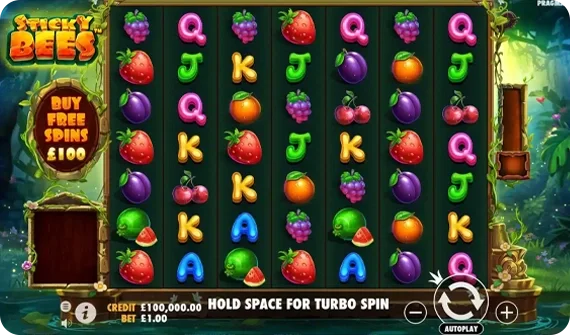
An 8x8 grid where bee symbols are sticky: when they form a cluster, they remain on the grid during the free spins round, turning into wilds. The more bees that accumulated before the free spins trigger, the denser the wild coverage during the bonus.
The sticky mechanic gives the base game a clear objective: accumulate bees for the bonus. Players who like having a visible goal during the base game will find this more engaging than a meter-based equivalent.
96.59%, High, 2,000x
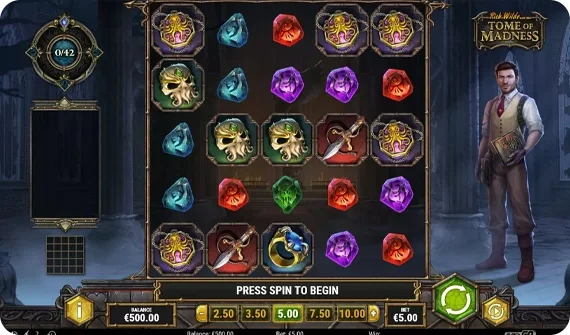
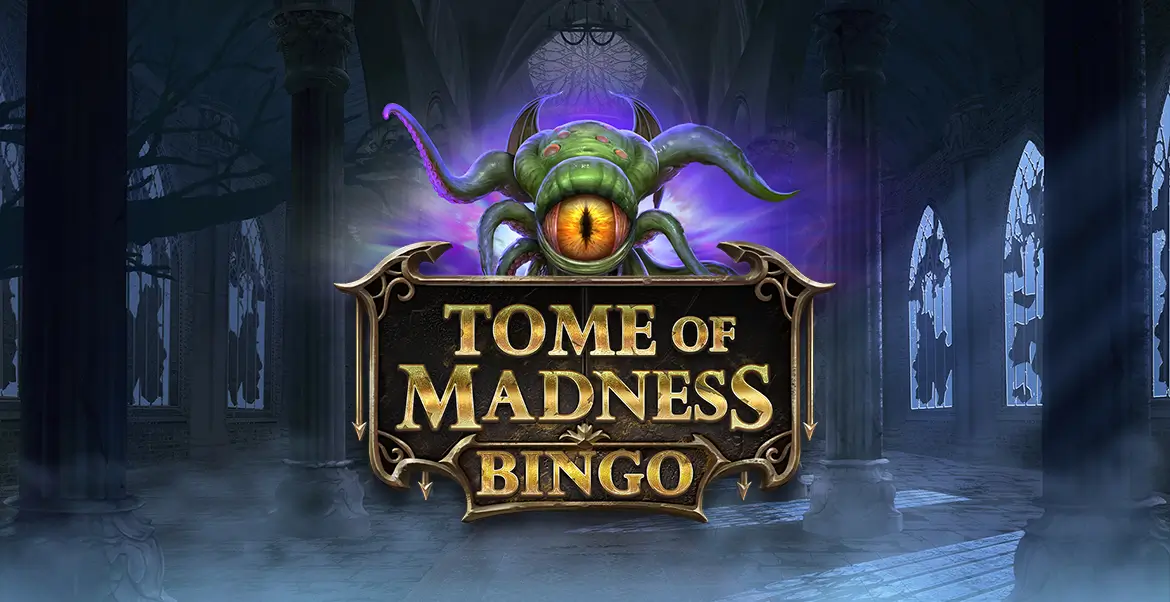
Tome of Madness uses overlapping 3x3 grids, where the centre position is shared between them. A portal in the centre transfers symbols between grids and can stack multipliers across both.
The dual-grid structure is the most distinctive visual feature in this list. Understanding how the shared centre position creates cross-grid wins requires a few minutes with the paytable, but once understood, the mechanic makes sessions considerably more interesting than a standard grid game.
96.26%, High, 7,500x
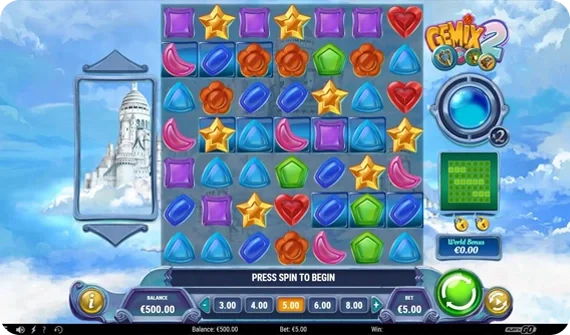
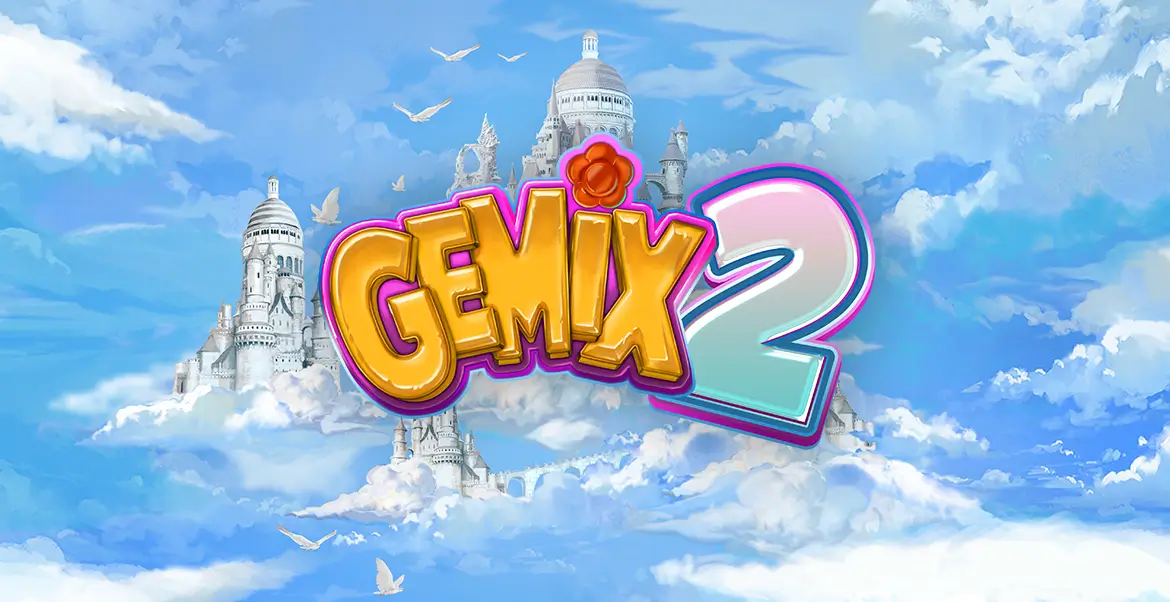
The sequel to Gemix retains the 7x7 grid and Magic Meter but adds a second crystal that charges separately, giving the session more ways to progress through the feature stages.
Medium volatility and a 2,500x maximum are consistent with the original. Gemix 2 is the better choice for returning Gemix players; the dual-crystal mechanic adds session variety without increasing complexity significantly.
96.10%, High, 12,278x
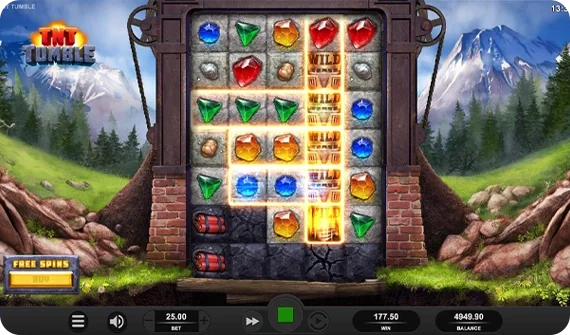
TNT Tumble uses a mechanic where losing spins remove the lowest-value symbols from the grid and replace them with TNT blocks. Enough TNT blocks trigger an explosion that clears the board and can trigger the free spins bonus.
The symbol removal mechanic creates a feeling of progress during losing spins; the grid is gradually improving toward a bonus trigger even when wins are not landing. The 96.10% RTP is the lowest in this selection, so players running wagering requirements should factor that in.
96.62%, High, 5,000x
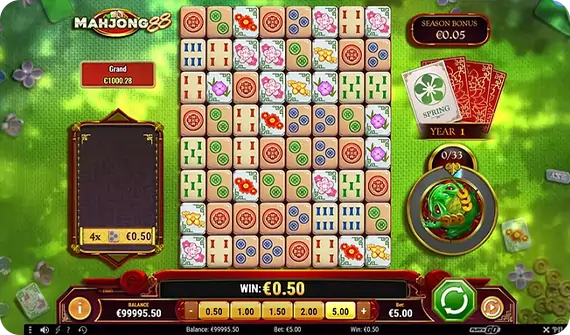
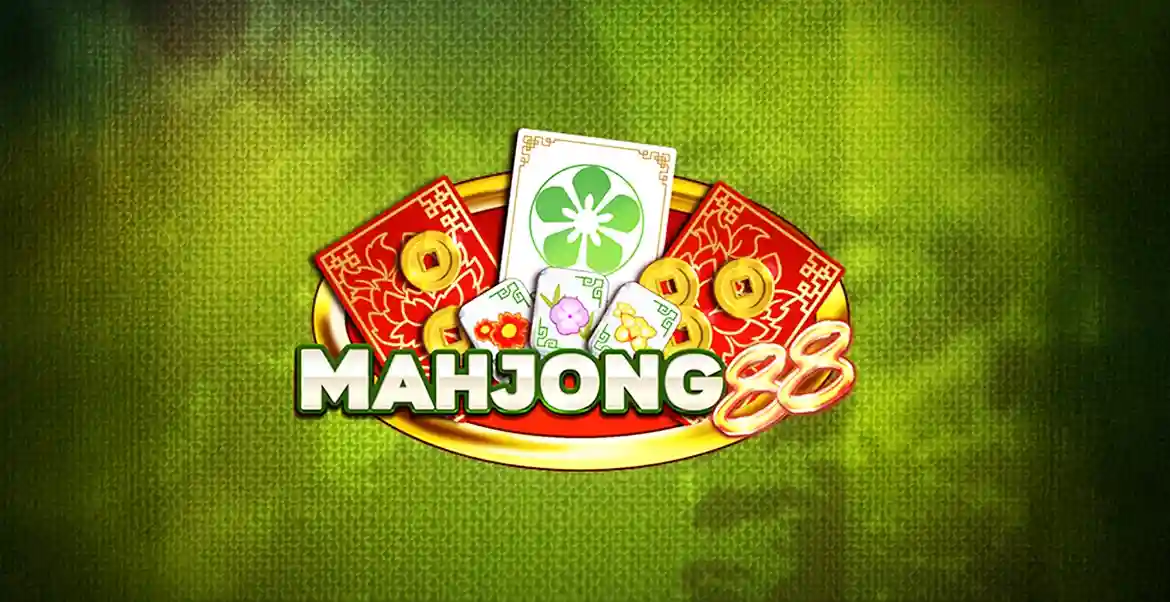
This high volatility slot offers users a chance to see bigger wins. The game uses the beloved tile-based Chinese game of Mahjong, which is supported by gorgeous graphics and gameplay.
Fans of Asian-themed slot games will love the theme and style, along with its casual and relaxing play. Mahjong 88’s most exciting way to win involve matching 12 or more tiles, which can result in winnings that are up to 500x your bet.
The cascade moment that separates cluster pays from everything else is the third one. The first cascade is expected: you landed a win, it removed, new symbols came. The second cascade surprises you slightly. The third one is when the session changes. The grid is now configured by two rounds of symbol removal rather than the initial random placement, and the clusters forming are happening in a board that your wins have shaped. That is the moment experienced cluster pays players recognise; not the win amount, but the realisation that a fourth cascade is also possible.
|
Factor |
Cluster Pays |
Traditional Paylines |
Megaways |
|
Win Formation |
Groups of 5+ matching symbols connected horizontally or vertically anywhere on the grid |
Matching symbols on specific fixed lines, left to right from reel 1 |
Matching symbols on adjacent reels, left to right; number of ways changes every spin |
|
Grid vs. Reels |
Grid (typically 7x7 or 6x6), no reels, no paylines |
Reels (typically 3x3 or 5x3) with fixed paylines displayed on screen |
Reels (typically 6) with variable symbol rows per reel (1-7 symbols per reel per spin) |
|
Ways to Win |
No fixed number — any cluster of 5+ qualifying symbols wins; multiple simultaneous clusters possible |
Fixed — 5, 10, 20, 25, up to 100 paylines |
Dynamic — up to 117,649 ways per spin; changes every spin |
|
Cascades |
Standard feature — winning symbols removed, new ones fall in, chain reactions possible in one spin |
Not standard — wins collected, reels spin again for the next round |
Common in Megaways titles; tumble mechanic frequently built in |
|
Typical Volatility |
Medium to high — cascade chains create burst potential; base game can be slow between features |
Wide range — low through high depending on the specific title |
High to very high — dynamic ways system and bonus features push variance up |
|
Best For |
Visual, grid-based play; chain-reaction appeal; players drawn to grid clarity |
Predictability, clear payline structures, familiar reel-based formats |
Players chasing very high max wins; comfortable with high variance |
|
Example Game |
Reactoonz, Jammin' Jars |
Book of Dead, Starburst |
Dog House Megaways, Bonanza Megaways |

Win Formation
Cluster Pays
Groups of 5+ matching symbols connected horizontally or vertically anywhere on the grid
Traditional Paylines
Matching symbols on specific fixed lines, left to right from reel 1
Megaways
Matching symbols on adjacent reels, left to right; number of ways changes every spin

Grid vs. Reels
Cluster Pays
Grid (typically 7x7 or 6x6), no reels, no paylines
Traditional Paylines
Reels (typically 3x3 or 5x3) with fixed paylines displayed on screen
Megaways
Reels (typically 6) with variable symbol rows per reel (1-7 symbols per reel per spin)

Ways to Win
Cluster Pays
No fixed number — any cluster of 5+ qualifying symbols wins; multiple simultaneous clusters possible
Traditional Paylines
Fixed — 5, 10, 20, 25, up to 100 paylines
Megaways
Dynamic — up to 117,649 ways per spin; changes every spin

Cascades
Cluster Pays
Standard feature — winning symbols removed, new ones fall in, chain reactions possible in one spin
Traditional Paylines
Not standard — wins collected, reels spin again for the next round
Megaways
Common in Megaways titles; tumble mechanic frequently built in

Typical Volatility
Cluster Pays
Medium to high — cascade chains create burst potential; base game can be slow between features
Traditional Paylines
Wide range — low through high depending on the specific title
Megaways
High to very high — dynamic ways system and bonus features push variance up

Best For
Cluster Pays
Visual, grid-based play; chain-reaction appeal; players drawn to grid clarity
Traditional Paylines
Predictability, clear payline structures, familiar reel-based formats
Megaways
Players chasing very high max wins; comfortable with high variance

Example Game
Cluster Pays
Reactoonz, Jammin' Jars
Traditional Paylines
Book of Dead, Starburst
Megaways
Dog House Megaways, Bonanza Megaways
The cluster pays player who gets the most from the format is not the visual player or the beginner. It is the mid-stakes player who understands that a cascade chain on a 7x7 grid can pay multiples of any individual cluster win. These players approach the base game differently. They are not watching the grid for the next win; they are watching the grid's symbol distribution, knowing that a heavily concentrated area of same-colour symbols is a cascade waiting to start. That pattern recognition is what separates good cluster pays sessions from fortunate ones.

Big Time Gaming's proprietary mechanic, introduced in 2020 with Star Clusters Megaclusters. In a standard cluster pays game, winning symbols simply disappear. In Megaclusters, each winning symbol splits into four smaller symbols occupying the same grid space. If those smaller symbols form winning clusters in turn, they are removed and replaced, extending the chain reaction further. The grid physically expands as splits occur: Star Clusters starts on a 4x4 layout and can reach 16x16 during free spins, accommodating up to 256 symbols. RTP: 96.54%. Volatility: medium-high. Max win: 23,960x. BTG has licensed the Megaclusters mechanic to other providers; Kluster Krystals Megaclusters by Relax Gaming is a notable example. Suits players who want the cluster pays cascade experience taken to a more visually complex and potentially extreme level.

Cluster pays games with a separate meter or progression system that charges during the base game and releases a feature when full. Reactoonz charges its Quantum Leap meter with every winning cluster, activating one of four bonus features when full. Moon Princess charges three separate princess meters simultaneously, each triggering a different ability. The meter adds a base-game objective; you are not just waiting for a win, you are building anticipation toward a feature trigger. Most of the higher-volatility games in this format use this structure.
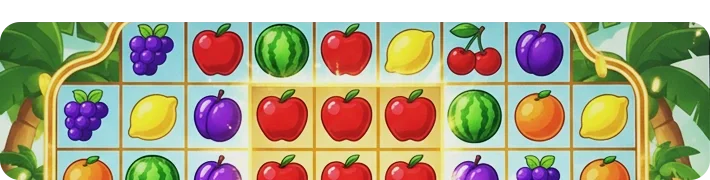
The original NetEnt-style format: a fixed grid, wins from connecting clusters of five or more symbols, cascades on every win, and a scatter or bonus feature to trigger free spins. Aloha! Cluster Pays is the founding example. Most Play'n GO grid games (Gemix, Mahjong 88) follow this structure. Straightforward to learn and consistent in how sessions progress.
Find the slots with the highest RTP in 2026. Ranked by verified payout rate, with honest context on what RTP really means for your session.
Find the best low variance slots online. Longer sessions, strong RTPs, and high hit frequency. Compare top games and pick the right one for your budget.
Learn what genuine slot strategy looks like: game selection, bankroll management, RTP tools, demo mode & how to avoid the myths that cost players money.
Learn how online slots work from scratch. This slots guide covers RNG, paylines, RTP, volatility, paytables, and how to choose the right game.
Find the best classic slots online in 2026. Compare RTP, volatility and session length to pick the right game for your budget and goals.
Find the slots with the biggest max win potential in 2026. Ranked by verified multiplier, with honest context on what these figures mean for real sessions.
Find the best penny slots online in 2026. Low minimum bets, strong RTPs & genuine session value. Includes honest tips on making your budget go further.
What is Bonus Buy in slots? Is it worth the cost, and which games have the best bonus rounds to buy? Find honest answers in this guide for 2026.
Find the best high volatility slots for 2026. Compare RTP, max win potential, bonus mechanics, and learn to manage variance like an experienced player.
Learn how Megaways slots work, browse our top picks with up to 117,649 ways to win per spin, and find out what makes these games stand out.
Explore the most popular online slot themes in 2026 - from Egyptian and Greek mythology to fruit machines and fishing slots. Find your next favourite slot.
Learn about the different types of slot machines, from traditional and video slots to progressive jackpots and new 3D and VR games. Slots are among the most popular casino games — with so many styles to choose from, this guide explains how each type works and finds your best fit.
New to slot tournaments? This easy guide explains how they work, how to join, tips to win, and where to play—online, in casinos, or on a cruise. Slot tournaments are special events where players compete against each other on slot machines.

Learn how to play progressive slots and try top jackpot games for free. No signup, just spinning for a shot at the big one!
This is a full guide to different slot machine symbols so that you know what you're looking at when playing at online casinos. Slot machines have been around for the better part of a century. What started as a simple device with a pull lever has evolved into something.

Though some games have universal names, there are some areas of the world where differences arise. Some places call slot machines “pokies.” Full breakdown of Pokies explained Even those who don’t actively play them generally know about slot machines. What you may not have realized is that in Australia/New Zealand.
Learn why the return to player (RTP) percentage is critical for your success when playing online slots. Online slots are the undisputed king of casino games, with thousands of titles to choose from — but one part of playing that many overlook is RTP, a crucial number to understand.
Play free slots online with no deposit or registration needed. Try top slot games from leading providers and enjoy risk-free spins anytime.
Check out the Top 10 Play’n GO slot games. There’s rappers, undead pharaohs, and ancient explorers! Play’n GO are one of the largest entertainment providers in the world of slots and online gaming. They supply exciting slot games with fun themes, exciting background music, and varying bonuses and special features.
Have you ever wondered how slot machines are made? Find out how slots machines work and how they are manufactured. Slot machines were first invented in San Francisco by a car mechanic who was looking to provide entertainment for his customers as they were waiting for their cars to.
Wondering when that slot machine is going to give a big payout? We tell you how to know when a machine will hit. Depending on what kind of slot machine you play, the way it is triggered can vary. Some games need you to land on specific special symbols,.
What online slot should you choose to play? Variance or volatility is a factor that can make a big difference. Many slot players don’t understand just how important volatility of a game can be. We explain what it means. Too much choice can be a dangerous thing.
Have you ever wondered about the ? Read our guide on the evolution of slots history. Could you imagine the sights and sounds of the casino floor without the slot machine? Its flashing lights, ringing bells, and the enticing tingle of crashing coins make the experience whole.
Slots come with just as many special terms as any other game so we explain all the online slot game features out there. As with many other games, casino-based or otherwise, there can be a lot of terminologies involved with playing online slots.
Slots at any online casino come with an RTP. These can vary but what is the Return to Player and why does it matter? In this article we are going to take a look at an acronym that not enough casino players pay attention.