


Video Poker Odds & Payouts
Understand video poker payouts: paytable multipliers, hand probability in a 52-card deck, and how configurations and variants affect payout structure.

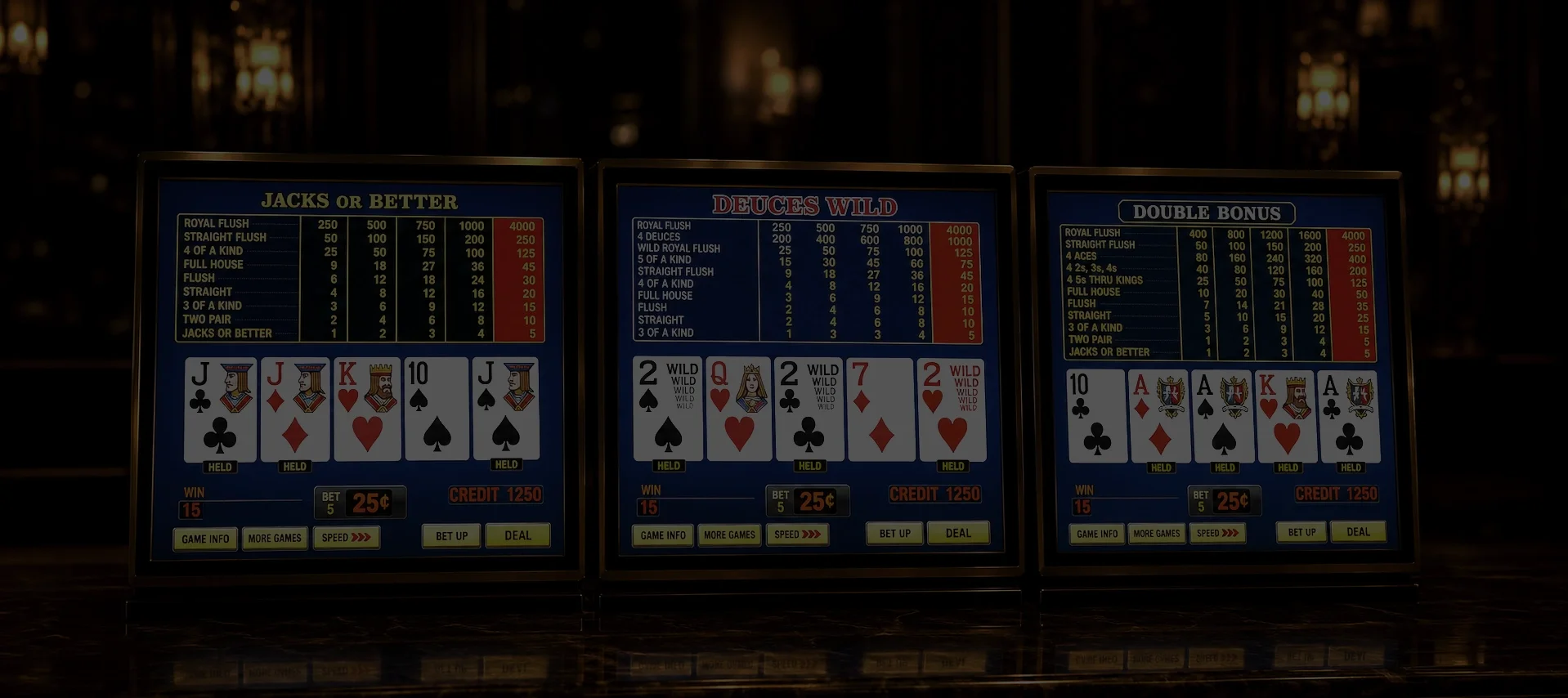

|
Variant |
Deck |
Wild cards |
Min. qualifying hand |
Royal Flush structure |
Key paytable feature |
|
Jacks or Better |
52 |
None |
Pair of Jacks |
Single tier (standard) |
Baseline: no enhanced payouts |
|
Deuces Wild |
52 |
All four 2s |
Three of a Kind |
Natural + Wild Royal Flush (split rates) |
Pairs do not qualify; wild-assisted hands pay at adjusted rates |
|
Double Bonus Poker |
52 |
None |
Pair of Jacks |
Single tier (standard) |
Enhanced payouts for four Aces and four 2s/3s/4s; other rows adjusted |
|
Double Double Bonus |
52 |
None |
Pair of Jacks |
Single tier (standard) |
Enhanced payouts for four Aces with specific kicker cards; further row adjustments |
|
Joker Poker |
53 |
One Joker |
Kings or Better / Two Pair |
Natural + Wild Royal Flush (split rates) |
53-card deck; minimum hand raised; paytable adjusted for wild card frequency |
|
Aces and Faces |
52 |
None |
Pair of Jacks |
Single tier (standard) |
Enhanced payouts for four Aces and four face cards (J, Q, K); other rows adjusted |
|
Multi-Hand Video Poker |
52 per hand |
Variant-dependent |
Variant-dependent |
Variant-dependent |
Format variant: same deal played across multiple simultaneous hands |
|
Tens or Better |
52 |
None |
Pair of Tens |
Single tier (standard) |
Lower minimum qualifying hand than Jacks or Better; paytable adjusted accordingly |
|
Bonus Poker |
52 |
None |
Pair of Jacks |
Single tier (standard) |
Enhanced payout for four Aces; modest adjustments to other rows |

Jacks or Better
Deck
52
Wild cards
None
Min. qualifying hand
Pair of Jacks
Royal Flush structure
Single tier (standard)
Key paytable feature
Baseline: no enhanced payouts

Deuces Wild
Deck
52
Wild cards
All four 2s
Min. qualifying hand
Three of a Kind
Royal Flush structure
Natural + Wild Royal Flush (split rates)
Key paytable feature
Pairs do not qualify; wild-assisted hands pay at adjusted rates

Double Bonus Poker
Deck
52
Wild cards
None
Min. qualifying hand
Pair of Jacks
Royal Flush structure
Single tier (standard)
Key paytable feature
Enhanced payouts for four Aces and four 2s/3s/4s; other rows adjusted

Double Double Bonus
Deck
52
Wild cards
None
Min. qualifying hand
Pair of Jacks
Royal Flush structure
Single tier (standard)
Key paytable feature
Enhanced payouts for four Aces with specific kicker cards; further row adjustments

Joker Poker
Deck
53
Wild cards
One Joker
Min. qualifying hand
Kings or Better / Two Pair
Royal Flush structure
Natural + Wild Royal Flush (split rates)
Key paytable feature
53-card deck; minimum hand raised; paytable adjusted for wild card frequency

Aces and Faces
Deck
52
Wild cards
None
Min. qualifying hand
Pair of Jacks
Royal Flush structure
Single tier (standard)
Key paytable feature
Enhanced payouts for four Aces and four face cards (J, Q, K); other rows adjusted

Multi-Hand Video Poker
Deck
52 per hand
Wild cards
Variant-dependent
Min. qualifying hand
Variant-dependent
Royal Flush structure
Variant-dependent
Key paytable feature
Format variant: same deal played across multiple simultaneous hands

Tens or Better
Deck
52
Wild cards
None
Min. qualifying hand
Pair of Tens
Royal Flush structure
Single tier (standard)
Key paytable feature
Lower minimum qualifying hand than Jacks or Better; paytable adjusted accordingly

Bonus Poker
Deck
52
Wild cards
None
Min. qualifying hand
Pair of Jacks
Royal Flush structure
Single tier (standard)
Key paytable feature
Enhanced payout for four Aces; modest adjustments to other rows
|
Feature |
Detail |
|
Deck |
Standard 52 cards |
|
Wild cards |
None |
|
Minimum qualifying hand |
Pair of Jacks, Queens, Kings, or Aces; a pair of tens or lower does not qualify |
|
Royal Flush structure |
Single tier: standard payout at 1–4 coins; enhanced payout at 5 coins (e.g. 4,000 coins on a 9/6 paytable) |
|
Key paytable feature |
Baseline configuration: no wild cards, no enhanced Four of a Kind rows; commonly referenced as 9/6 or 8/5 (Full House/Flush multipliers) |

Deck
Detail
Standard 52 cards

Wild cards
Detail
None

Minimum qualifying hand
Detail
Pair of Jacks, Queens, Kings, or Aces; a pair of tens or lower does not qualify

Royal Flush structure
Detail
Single tier: standard payout at 1–4 coins; enhanced payout at 5 coins (e.g. 4,000 coins on a 9/6 paytable)

Key paytable feature
Detail
Baseline configuration: no wild cards, no enhanced Four of a Kind rows; commonly referenced as 9/6 or 8/5 (Full House/Flush multipliers)
|
Feature |
Detail |
|
Deck |
Standard 52 cards |
|
Wild cards |
All four 2s; each can substitute for any other card to complete a hand |
|
Minimum qualifying hand |
Three of a Kind; pairs do not qualify because wild cards make three-of-a-kind combinations significantly more achievable |
|
Royal Flush structure |
Split into two tiers: Natural Royal Flush (no wild cards used) and Wild Royal Flush (one or more deuces substituted); each pays at a different rate |
|
Key paytable feature |
Wild cards increase hand frequency for high-ranking combinations; paytable structured accordingly; lower multipliers for wild-assisted hands, no payout for pairs |
Deck
Detail
Standard 52 cards
Wild cards
Detail
All four 2s; each can substitute for any other card to complete a hand
Minimum qualifying hand
Detail
Three of a Kind; pairs do not qualify because wild cards make three-of-a-kind combinations significantly more achievable
Royal Flush structure
Detail
Split into two tiers: Natural Royal Flush (no wild cards used) and Wild Royal Flush (one or more deuces substituted); each pays at a different rate
Key paytable feature
Detail
Wild cards increase hand frequency for high-ranking combinations; paytable structured accordingly; lower multipliers for wild-assisted hands, no payout for pairs
|
Feature |
Detail |
|
Deck |
Standard 52 cards |
|
Wild cards |
None |
|
Minimum qualifying hand |
Pair of Jacks, Queens, Kings, or Aces; same as Jacks or Better |
|
Royal Flush structure |
Single tier: standard payout at 1–4 coins; enhanced payout at 5 coins |
|
Key paytable feature |
Enhanced payouts for four Aces and four 2s/3s/4s; Full House, Flush, and Two Pair typically reduced to offset |
Deck
Detail
Standard 52 cards
Wild cards
Detail
None
Minimum qualifying hand
Detail
Pair of Jacks, Queens, Kings, or Aces; same as Jacks or Better
Royal Flush structure
Detail
Single tier: standard payout at 1–4 coins; enhanced payout at 5 coins
Key paytable feature
Detail
Enhanced payouts for four Aces and four 2s/3s/4s; Full House, Flush, and Two Pair typically reduced to offset
|
Feature |
Detail |
|
Deck |
Standard 52 cards |
|
Wild cards |
None |
|
Minimum qualifying hand |
Pair of Jacks, Queens, Kings, or Aces; same as Jacks or Better |
|
Royal Flush structure |
Single tier: standard payout at 1–4 coins; enhanced payout at 5 coins |
|
Key paytable feature |
Extends Double Bonus by adding a further enhanced payout tier for four Aces with a specific kicker card (typically a 2, 3, or 4); other paytable rows adjusted further |
Deck
Detail
Standard 52 cards
Wild cards
Detail
None
Minimum qualifying hand
Detail
Pair of Jacks, Queens, Kings, or Aces; same as Jacks or Better
Royal Flush structure
Detail
Single tier: standard payout at 1–4 coins; enhanced payout at 5 coins
Key paytable feature
Detail
Extends Double Bonus by adding a further enhanced payout tier for four Aces with a specific kicker card (typically a 2, 3, or 4); other paytable rows adjusted further
|
Feature |
Detail |
|
Deck |
53 cards: standard 52-card deck plus one Joker |
|
Wild cards |
One Joker; substitutes for any card to complete a hand |
|
Minimum qualifying hand |
Kings or Better (a pair of Kings or Aces) or Two Pair, depending on variant configuration |
|
Royal Flush structure |
Split into two tiers: Natural Royal Flush (no Joker, higher rate) and Wild Royal Flush (Joker substituted, lower rate) |
|
Key paytable feature |
53-card deck and single wild card alter hand frequencies; minimum qualifying hand raised; all paytable multipliers adjusted to reflect changed hand distribution |
Deck
Detail
53 cards: standard 52-card deck plus one Joker
Wild cards
Detail
One Joker; substitutes for any card to complete a hand
Minimum qualifying hand
Detail
Kings or Better (a pair of Kings or Aces) or Two Pair, depending on variant configuration
Royal Flush structure
Detail
Split into two tiers: Natural Royal Flush (no Joker, higher rate) and Wild Royal Flush (Joker substituted, lower rate)
Key paytable feature
Detail
53-card deck and single wild card alter hand frequencies; minimum qualifying hand raised; all paytable multipliers adjusted to reflect changed hand distribution
|
Feature |
Detail |
|
Deck |
Standard 52 cards |
|
Wild cards |
None |
|
Minimum qualifying hand |
Pair of Jacks, Queens, Kings, or Aces; same as Jacks or Better |
|
Royal Flush structure |
Single tier: standard payout at 1–4 coins; enhanced payout at 5 coins |
|
Key paytable feature |
Enhanced payouts for four Aces and four face cards (Jacks, Queens, Kings); other rows adjusted downward to offset |
Deck
Detail
Standard 52 cards
Wild cards
Detail
None
Minimum qualifying hand
Detail
Pair of Jacks, Queens, Kings, or Aces; same as Jacks or Better
Royal Flush structure
Detail
Single tier: standard payout at 1–4 coins; enhanced payout at 5 coins
Key paytable feature
Detail
Enhanced payouts for four Aces and four face cards (Jacks, Queens, Kings); other rows adjusted downward to offset
|
Feature |
Detail |
|
Format type |
Format variant; the underlying rules and paytable are determined by the selected base variant (e.g. Jacks or Better, Deuces Wild) |
|
Hands per deal |
Typically 3, 5, 10, 25, 50, or 100 hands played simultaneously; varies by game configuration |
|
Initial deal |
One five-card hand is dealt face-up; the player selects cards to hold |
|
Draw phase |
Each hand draws independently from its own separately shuffled deck; held cards are fixed across all hands; replacement cards are drawn independently per hand |
|
Paytable |
The base variant's paytable applies to each hand independently |

Format type
Detail
Format variant; the underlying rules and paytable are determined by the selected base variant (e.g. Jacks or Better, Deuces Wild)

Hands per deal
Detail
Typically 3, 5, 10, 25, 50, or 100 hands played simultaneously; varies by game configuration

Initial deal
Detail
One five-card hand is dealt face-up; the player selects cards to hold

Draw phase
Detail
Each hand draws independently from its own separately shuffled deck; held cards are fixed across all hands; replacement cards are drawn independently per hand
Paytable
Detail
The base variant's paytable applies to each hand independently

Tens or Better uses a standard 52-card deck with no wild cards.
The minimum qualifying hand is a pair of tens: lower than the Jacks or Better threshold.
The paytable is adjusted to reflect the lower minimum qualifying hand: other row payouts are typically lower than Jacks or Better to account for the reduced qualifying threshold.
Bonus Poker uses a standard 52-card deck with no wild cards. The minimum qualifying hand is a pair of Jacks: the same as Jacks or Better. It adds a modest enhanced payout for Four Aces compared to standard Jacks or Better; other paytable rows, typically Two Pair, are slightly reduced to offset.
Bonus Poker sits between standard Jacks or Better and Double Bonus Poker in how much it enhances the Four of a Kind payout.

Pick'em Poker differs structurally from standard video poker. Two cards are dealt face-up, and two groups of additional cards are available face-down. The player selects one group to complete their hand. The final hand consists of the two dealt cards plus the three cards from the chosen group. There is no hold/discard phase in the standard sense; the decision is which group of cards to select, not which individual cards to keep. A standard 52-card deck is used; paytable structure varies by configuration.
Understand video poker payouts: paytable multipliers, hand probability in a 52-card deck, and how configurations and variants affect payout structure.
Play free video poker online with no deposit or registration required. Demo mode lets you observe paytables, hand rankings and deal-hold-draw across variants.

Video poker format explained: how paytables work, why hand rankings vary by variant, how coin count affects the Royal Flush tier, and what free play is for.

Learn how video poker works step by step: placing a bet, receiving cards, holding, drawing, and reading the paytable. Covers all major variants.
Understand how video poker works: hand rankings, paytables, and how variants like Jacks or Better and Deuces Wild differ. No strategy advice, no promotions.