


Video Poker Variants
Video poker variants explained: Jacks or Better, Deuces Wild, Double Bonus, Joker Poker and more. Structural differences, hand rankings and paytable rules.


Video poker payouts are determined by a fixed paytable: a schedule of multipliers applied to qualifying hands dealt from a standard 52-card deck. This page explains how the paytable multiplier system works, how hand probability is determined by the mathematics of the deck, how paytable configurations such as 9/6 and 8/5 differ structurally, and how wild card variants alter both hand frequency and payout structure. No strategy guidance is included; this is a reference page for understanding how the payout system is built.
Free video poker is available with no deposit or registration required. Demo mode is a useful way to observe how paytable payouts are applied in practice as hands are completed; the paytable is always visible during demo play.
Video poker pays out according to a fixed paytable: a schedule displayed on screen at all times that lists every qualifying hand and the multiplier paid per coin bet. Payouts are expressed as coin multipliers: the number of coins returned per coin wagered for each qualifying hand. A Full House on a 9/6 Jacks or Better paytable paying 9 times, for example, returns 9 coins per coin bet.
The total payout for any hand equals the per-coin multiplier multiplied by the number of coins bet. A Full House at 9 times on a five-coin bet returns 45 coins. Hands below the minimum qualifying threshold return nothing; the bet is lost. All payout values are fixed before play begins and cannot change during a hand or session. The paytable defines the complete payout structure for the game in play. For the full paytable reference across configurations, see video poker paytables. For a category-level overview of how the game works, see the video poker hub.
Each row of the paytable represents one qualifying hand, listed from highest to lowest payout. Each column represents a coin count from one to five; the value shown is the total payout in coins for that hand at that bet level. The bottom row is the minimum qualifying hand: the paytable floor. Any hand below it returns nothing. The Royal Flush row is typically structured with a disproportionately higher value at the five-coin column compared to the one-through-four coin columns. This is a structural tier built into the paytable; a fixed game rule, not a bonus or promotional feature.
The example below shows a 9/6 Jacks or Better configuration. This is a reference example only; paytable configurations vary by game and platform. For a full paytable reference, see video poker paytables.
|
Hand |
1 coin |
2 coins |
3 coins |
4 coins |
5 coins |
|
Royal Flush |
250 |
500 |
750 |
1,000 |
4,000 |
|
Straight Flush |
50 |
100 |
150 |
200 |
250 |
|
Four of a Kind |
25 |
50 |
75 |
100 |
125 |
|
Full House |
9 |
18 |
27 |
36 |
45 |
|
Flush |
6 |
12 |
18 |
24 |
30 |
|
Straight |
4 |
8 |
12 |
16 |
20 |
|
Three of a Kind |
3 |
6 |
9 |
12 |
15 |
|
Two Pair |
2 |
4 |
6 |
8 |
10 |
|
Jacks or Better |
1 |
2 |
3 |
4 |
5 |
In video poker, five cards are dealt from a standard 52-card deck. There are exactly 2,598,960 possible five-card combinations in a 52-card deck. The probability of any specific hand is determined by how many of those combinations form that hand.
Higher-ranking hands (Royal Flush, Straight Flush) can be formed in very few ways, so they occur less frequently. Lower-ranking hands (pairs, two pair) can be formed in many more ways, so they occur more often. The relationship between hand frequency and payout multiplier is the structural logic of the paytable: rarer hands carry higher multipliers, more common hands carry lower multipliers. Understanding this relationship explains why the paytable is structured the way it is, but it does not indicate how to approach any individual hold or discard decision.
Wild card variants change this structure. In Deuces Wild, all four 2s act as wild cards, which significantly increases the frequency of straights, flushes, and four-of-a-kind combinations. The minimum qualifying hand is therefore raised and the paytable multipliers are adjusted to reflect the new hand frequency distribution. For a complete breakdown of hand rankings across variants, see video poker hand rankings. For a full explanation of the deal mechanics, see how to play video poker.
The table below shows the number of distinct five-card combinations that form each hand from a standard 52-card deck, counted before any hold or discard phase. These figures are mathematical properties of the deck; they describe hand rarity at the initial deal, not the probabilities during the draw phase after cards are held. The data explains why the paytable multiplier hierarchy is structured as it is. It is not a guide to which hands are worth targeting.
|
Hand |
Combinations (52-card deck) |
Notes |
|
Royal Flush |
4 |
4 possible suited A-K-Q-J-10 sequences |
|
Straight Flush |
36 |
Excludes Royal Flush: 9 per suit × 4 suits |
|
Four of a Kind |
624 |
13 ranks × 48 remaining card choices |
|
Full House |
3,744 |
13 choices for three-of-a-kind rank × 12 for pair rank |
|
Flush |
5,108 |
Excludes straight flushes: suited non-consecutive combinations |
|
Straight |
10,200 |
Excludes straight flushes: consecutive mixed-suit combinations |
|
Three of a Kind |
54,912 |
Three matching rank cards plus two unmatched |
|
Two Pair |
123,552 |
Two separate pairs plus one unmatched card |
|
Jacks or Better (pair) |
337,920 |
One pair of J, Q, K or A plus three unmatched cards |
|
Below qualifying |
~2,062,860 |
Hands below minimum qualifying threshold in Jacks or Better |
|
Total combinations |
2,598,960 |
All possible five-card hands from a 52-card deck |
Note: these figures apply to a standard Jacks or Better configuration. Wild card variants (Deuces Wild, Joker Poker) alter hand frequencies significantly; see the section below.
The same video poker variant can appear with different paytable configurations. The variant name and rules remain the same, but the multipliers for specific hands differ between configurations. The most commonly referenced example is Jacks or Better, where configurations are typically identified by the Full House and Flush multipliers.
A 9/6 configuration pays 9 times for a Full House and 6 times for a Flush. An 8/5 configuration pays 8 times and 5 times for the same hands. All other hand payouts in both configurations are typically identical; the difference is confined to the Full House and Flush rows. Both configurations are standard; neither is a promotional variant nor an error. For the full paytable reference across configurations, see video poker paytables and the Jacks or Better page.
The table below shows the per-coin multipliers for both configurations at a one-coin bet. Total payouts scale proportionally with coin count for all hands except the Royal Flush at five coins.
|
Hand |
9/6 configuration (per coin) |
8/5 configuration (per coin) |
|
Royal Flush |
250 (1–4 coins) / 4,000 (5 coins) |
250 (1–4 coins) / 4,000 (5 coins) |
|
Straight Flush |
50 |
50 |
|
Four of a Kind |
25 |
25 |
|
Full House |
9 |
8 |
|
Flush |
6 |
5 |
|
Straight |
4 |
4 |
|
Three of a Kind |
3 |
3 |
|
Two Pair |
2 |
2 |
|
Jacks or Better |
1 |
1 |
Wild card variants introduce structural changes to both hand frequency and paytable values. In Deuces Wild, all four 2s act as wild cards and can substitute for any other card to complete a hand. Because wild cards significantly increase the frequency of straights, flushes, and four-of-a-kind hands, the minimum qualifying hand is raised to Three of a Kind; pairs no longer qualify because combinations below Three of a Kind become too common relative to what the paytable can sustain.
Because three-of-a-kind combinations occur more frequently, the paytable is adjusted: multipliers for wild-assisted hands are lower than their natural equivalents in a standard variant. The Royal Flush is divided into two separately valued hands: Natural Royal Flush (formed without any wild cards) pays at a higher multiplier than Wild Royal Flush (formed with one or more deuces substituted), because the two forms occur at different frequencies. For the full Deuces Wild structural overview, see Deuces Wild.
In Joker Poker, one Joker is added to a 53-card deck and acts as a wild card. The minimum qualifying hand typically rises to Kings or Better or Two Pair, depending on the variant configuration, and all paytable multipliers are adjusted to reflect the altered hand frequency distribution. For a full overview of how wild card and other variants are structured, see the video poker variants page.
In most video poker variants, the Royal Flush payout is structured differently from every other hand on the paytable. All other qualifying hands pay proportionally regardless of coin count: a Full House at 9 times pays 9 coins on a one-coin bet and 45 coins on a five-coin bet. The Royal Flush does not follow this proportional structure.
Instead, the Royal Flush carries a standard multiplier for bets of one through four coins and a significantly higher multiplier for the maximum five-coin bet. On a 9/6 Jacks or Better paytable: a Royal Flush on a one-coin bet pays 250 coins; on a five-coin bet, the same hand pays 4,000 coins (800 coins per coin bet). This two-tier structure is a fixed rule built into the paytable. It applies across most standard video poker variants and is not a promotional feature specific to any game or platform.
The table below compares video poker's payout structure with two other common casino game formats. No conclusions are drawn about which format offers better value or returns.
|
Feature |
Video Poker |
Slots |
Table Poker |
|
Payout basis |
Fixed paytable: hand-based multipliers |
Fixed paytable: symbol-match combinations |
Variable: hand result vs dealer or other players |
|
Payout transparency |
Paytable always visible on screen before play |
Paytable visible; RNG determines symbol outcomes |
Payouts defined by game rules; depends on live play |
|
Player decisions |
Hold/discard affects which hand is completed |
No decisions; spin only |
Bet sizing, raises, folds affect outcome |
|
Payout range |
Lowest: 1× (Jacks or Better pair); highest: typically 800× per coin (Royal Flush, max bet) |
Varies widely by game configuration |
Variable; dependent on hand strength and opponent/dealer holdings |
|
Wild cards |
Variant-dependent (Deuces Wild, Joker Poker) |
Variant-dependent (wild symbols) |
Typically none in standard variants |
|
Fixed vs variable |
Fixed: determined by paytable before play begins |
Fixed: determined by paytable before play begins |
Variable: outcome not predetermined |
Video poker and slots share the same fixed-paytable structure; outcomes are evaluated against a predetermined payout schedule, and both are played against the machine rather than against other participants. Table poker differs structurally; payouts are not fixed in advance and depend on hand strength relative to a dealer or opponents. Both video poker and slots sit within the broader casino games library as machine-based, fixed-paytable formats.
Payouts are calculated by multiplying the per-coin multiplier shown on the paytable by the number of coins bet. For example, a Full House on a 9/6 Jacks or Better paytable pays 9 coins per coin bet; on a five-coin bet, the total payout is 45 coins. Hands below the minimum qualifying threshold return nothing.
The 9/6 notation refers to the multipliers for Full House and Flush in a Jacks or Better configuration: a Full House pays 9 coins per coin bet and a Flush pays 6 coins per coin bet. An 8/5 configuration pays 8 and 5 times for the same hands. Both are standard configurations; all other hand payouts are typically the same between them.
A Royal Flush can be formed in exactly 4 ways from a standard 52-card deck: one per suit. Out of 2,598,960 possible five-card combinations, this makes it the rarest starting hand in the deck. This rarity is reflected in its high paytable multiplier. Note that the figures describe initial deal probability before the hold/discard and draw phase.
Wild cards increase the frequency of certain high-ranking hands, which requires the paytable to be restructured. In Deuces Wild, for example, the minimum qualifying hand rises to Three of a Kind because pairs become too common relative to what the paytable can sustain. The Royal Flush is split into Natural and Wild versions at different payout rates because they occur at different frequencies.
The Royal Flush payout is structured across two tiers in most video poker variants: a standard multiplier applies for bets of one through four coins, and a higher multiplier applies at the maximum five-coin bet. On a 9/6 Jacks or Better paytable, this means a Royal Flush pays 250 coins at one coin but 4,000 coins at five coins. This two-tier structure is a fixed rule built into the paytable; it is not a promotional feature.
It depends on the variant. In standard Jacks or Better, the minimum qualifying hand is a pair of Jacks, Queens, Kings, or Aces. In Deuces Wild, it is Three of a Kind. In Joker Poker, it is typically Kings or Better or Two Pair. The minimum qualifying hand is always shown as the lowest entry on the paytable.
Both video poker and slots use a fixed paytable evaluated against a random outcome. The difference is that video poker evaluates a five-card hand from a standard deck, while slots evaluate symbol combinations generated by an RNG without a deck. Video poker also involves a player decision (which cards to hold) that determines which hand is completed; slots involve no decisions after the spin.
Jack Garry is a Los Angeles-based online casino writer and editor with five years of experience reviewing platforms, covering regulated gambling markets, and helping players make informed decisions. Raised in Las Vegas and steeped in casino culture from an early age, Jack brings a perspective to his writing that goes beyond the research.
Video poker variants explained: Jacks or Better, Deuces Wild, Double Bonus, Joker Poker and more. Structural differences, hand rankings and paytable rules.
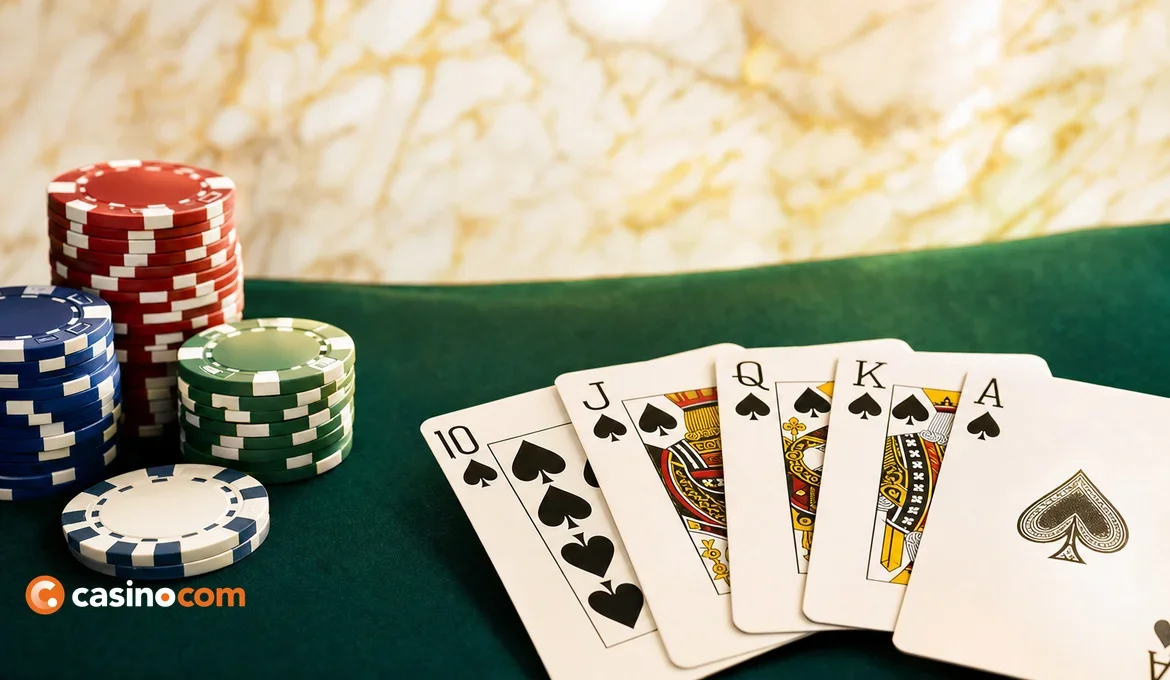
Play free video poker online with no deposit or registration required. Demo mode lets you observe paytables, hand rankings and deal-hold-draw across variants.
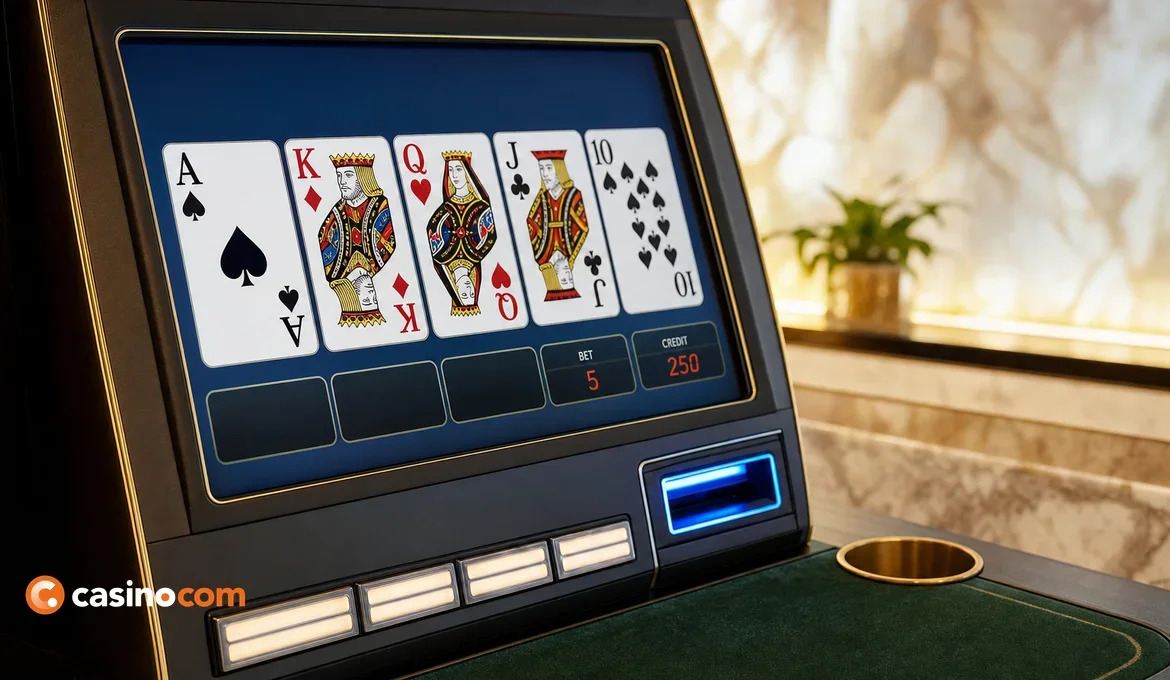
Video poker format explained: how paytables work, why hand rankings vary by variant, how coin count affects the Royal Flush tier, and what free play is for.

Learn how video poker works step by step: placing a bet, receiving cards, holding, drawing, and reading the paytable. Covers all major variants.

Understand how video poker works: hand rankings, paytables, and how variants like Jacks or Better and Deuces Wild differ. No strategy advice, no promotions.