


Life path number: meaning and how to calculate it

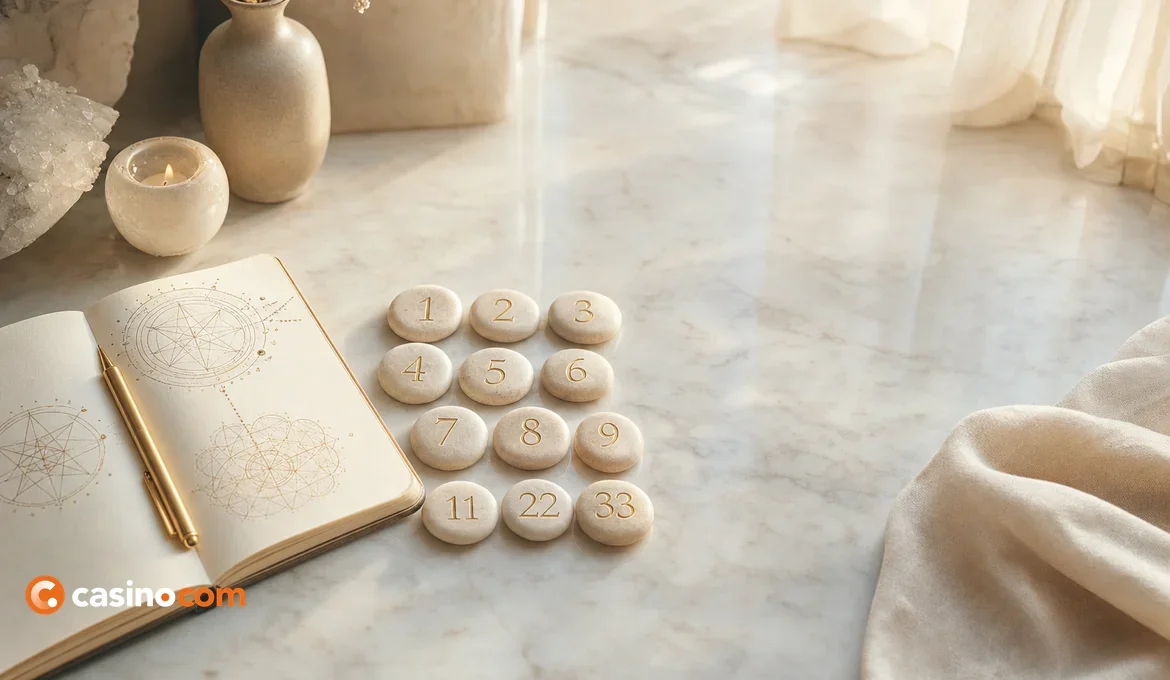

Your birth date is one detail about you that never changes, so it's easy to see why numerologists believe it holds a number worth knowing.
A life path number is a single number from 1 to 9, or a master number 11, 22 or 33, calculated by reducing the digits of your full birth date. In numerology, it's believed to describe your core personality and the main themes of your life.
Below, I walk through how to calculate yours, how master numbers work, and what each number is said to mean.
What is a life path number?
Numerologists treat the life path as the most important number in a personal chart. Your name can change through marriage or choice, but your birth date can't. That makes the life path the fixed foundation that every other reading builds on. If a numerology chart were a map, the life path would be the main road, with the other numbers adding detail along the way.
Where the idea comes from
Most accounts trace the philosophical roots to Pythagoras, the Greek thinker born around 570 BCE. His followers believed numbers held the key to the order of the universe. The system people use today is much younger, though. The word "numerology" doesn't appear in English until around 1907.
Modern Western numerology was largely shaped by Mrs. L. Dow Balliett (1847 to 1929), an American music teacher who self-published books on number vibration from 1905 onward. Her student Dr. Juno Jordan (1884 to 1984) spent decades refining the system at the California Institute of Numerical Research, and her 1965 book Numerology: The Romance in Your Name is still treated as a standard text. Their method is often called "Pythagorean," even though Pythagoras himself had nothing to do with it.
How it differs from other numbers
Numerology uses several core numbers, and each one comes from a different source:
- Expression (or destiny) number: calculated from all the letters of your full birth name, and read as your natural talents.
- Soul urge (or heart's desire) number: calculated from the vowels in your name, and read as your inner motivations.
- Personality number: calculated from the consonants in your name, and read as the side others see first.
- Birthday number: taken from the day of the month you were born, and read as a specific gift that adds to the life path.
Angel numbers work differently again. They aren't calculated from anything personal. They're repeating sequences like 111 or 444 that people notice in daily life and read as messages.
How to calculate your life path number
Since the whole number rests on your birth date, you can find it with a pen and a few minutes of simple addition.
If you're asking "what is my life path number?", the calculator gives you the answer instantly. If you'd rather see how to calculate a life path number by hand, or check the result, the two methods below walk you through it step by step.
Method 1: reduce each part separately
This method reduces the month, day and year on their own before adding them together.
- Write your birth date as month, day and year, with the full four-digit year.
- Reduce the month to a single digit. October (10) becomes 1 + 0 = 1. November (11) is a master number, so keep it as 11.
- Reduce the day the same way. The 15th becomes 1 + 5 = 6. If the day reduces to 11 or 22 (for example, the 29th: 2 + 9 = 11), keep it as it is.
- Add the four digits of the year, then keep adding the digits of the result until you reach a single digit, 11 or 22.
- Add the three results together.
- Reduce the total to a single digit, unless it's 11, 22 or 33. That's your life path number.
Worked example: March 15, 1990
- Month: March is 3.
- Day: 15 becomes 1 + 5 = 6.
- Year: 1 + 9 + 9 + 0 = 19, then 1 + 9 = 10, then 1 + 0 = 1.
- Total: 3 + 6 + 1 = 10, then 1 + 0 = 1.
The life path number is 1.
Method 2: add every digit
This shortcut treats the birth date as one long string of digits.
- Write your birth date as month, day and year, with the full four-digit year.
- Add every digit together, one by one.
- Reduce the total to a single digit, unless it's 11, 22 or 33.
Worked example: March 15, 1990
- Digits: 3 + 1 + 5 + 1 + 9 + 9 + 0 = 28.
- Reduce: 2 + 8 = 10, then 1 + 0 = 1.
The life path number is 1 again, so both methods agree for this date.
When the two methods give different results
The methods don't always match, because adding every digit at once can hide a master number that appears partway through. Take November 4, 1987:
- Method 1: the month stays as 11, the day is 4, and the year is 1 + 9 + 8 + 7 = 25, then 2 + 5 = 7. The total is 11 + 4 + 7 = 22, a master number, so the life path number is 22.
- Method 2: 1 + 1 + 4 + 1 + 9 + 8 + 7 = 31, then 3 + 1 = 4, so the life path number is 4.
In the second method, the 11 from November disappears into the running total, and with it the master number. That's why many numerologists recommend reducing each part separately, and it's the method the calculator on this page uses.
Master numbers 11, 22 and 33
That hidden 22 is a good example of why numerologists handle a few results differently from the rest.
Master numbers are the double-digit results 11, 22 and 33. Numerologists see them as amplified versions of the numbers they would reduce to (2, 4 and 6). They're said to carry more potential, but also more pressure. Because of that, they aren't reduced to a single digit the way other totals are.
When a master number stays
With the reduce-each-part method, the rule works like this:
- 11 and 22 stay whenever they appear, either as the reduced month, day or year, or as the final total.
- 33 stays when it's the final total. It can't appear earlier, because no month, day or year reduces to 33.
- Everything else is reduced, including other repeating totals such as 44, which becomes 4 + 4 = 8.
Not every numerologist follows this convention. Some keep a master number only when it's the final total, and a few leave master numbers out altogether. The rule above is the one this page and its calculator use.
Worked example: September 22, 1991
- Month: September is 9.
- Day: 22 is a master number, so it stays as 22.
- Year: 1 + 9 + 9 + 1 = 20, then 2 + 0 = 2.
- Total: 9 + 22 + 2 = 33, a master number, so it stays.
The life path number is 33. If the day had been reduced to 2 + 2 = 4, the total would have been 9 + 4 + 2 = 15, then 1 + 5 = 6, which shows how much the rule can change a result.
Life path number meanings: 1 to 9, 11, 22 and 33
With the number worked out and the master number rule settled, the interesting part is what each result is believed to say.
The table gives a quick overview of the 12 numbers, with a nickname commonly used in numerology and the traits they most often link to each one.
|
Number |
Nickname |
Core traits |
Strengths |
Challenges |
|
1 |
The leader |
Independent, driven, original |
Initiative, courage, determination |
Stubbornness, impatience, going it alone |
|
2 |
The peacemaker |
Diplomatic, sensitive, cooperative |
Empathy, tact, patience |
Self-doubt, oversensitivity, avoiding conflict |
|
3 |
The communicator |
Expressive, creative, sociable |
Charm, imagination, optimism |
Scattered focus, moodiness, superficiality |
|
4 |
The builder |
Practical, disciplined, loyal |
Reliability, organization, persistence |
Rigidity, stubbornness, overwork |
|
5 |
The adventurer |
Curious, restless, versatile |
Adaptability, courage, quick wit |
Impulsiveness, restlessness, fear of commitment |
|
6 |
The nurturer |
Caring, responsible, protective |
Loyalty, compassion, devotion |
Perfectionism, self-sacrifice, control |
|
7 |
The seeker |
Analytical, introspective, spiritual |
Insight, focus, wisdom |
Isolation, skepticism, aloofness |
|
8 |
The achiever |
Ambitious, confident, goal-driven |
Leadership, business sense, resilience |
Workaholism, control, focus on status |
|
9 |
The humanitarian |
Compassionate, idealistic, generous |
Tolerance, vision, kindness |
Self-sacrifice, difficulty letting go |
|
11 |
The intuitive |
Intuitive, inspiring, sensitive |
Insight, vision, empathy |
Nervous tension, self-doubt, overwhelm |
|
22 |
The master builder |
Visionary, practical, ambitious |
Big-picture planning, discipline, leadership |
Pressure, perfectionism, fear of failure |
|
33 |
The master teacher |
Compassionate, selfless, guiding |
Healing, devotion, wisdom |
Burnout, self-sacrifice, unrealistic standards |
A few words per number only go so far, so here is a closer look at how numerologists describe each one.
Life path number 1
The 1 is often described as the pioneer of the group: a self-starter who prefers to lead rather than follow and is happiest when trying something no one has done before. Numerologists credit it with drive and courage, but also warn that the same independence can turn into stubbornness or a habit of taking on everything alone.
Love: often linked to partners who respect their need for independence and don't try to steer.
Career: associated with roles that reward initiative, such as running a business or leading a team.
Life path number 2
Where the 1 pushes ahead, the 2 is said to bring people together. It's associated with tact, sensitivity and a gift for reading the room, qualities numerologists see as a natural talent for mediation. The challenge they point to is a tendency to put others first so often that its own needs get lost, along with a dislike of open conflict.
Love: often described as devoted and romantic, looking for a close, harmonious partnership.
Career: linked to cooperative work, such as counseling, human resources or diplomacy.
Life path number 3
The 3 is usually described as the creative communicator, at ease with words, humor and a crowd. Numerologists associate it with imagination and optimism that lift the people around it. On the other side, its energy can scatter across too many projects, and it may hide low moods behind a cheerful face.
Love: often linked to playful, affectionate relationships that keep things lively.
Career: associated with writing, performing, design, marketing and other expressive work.
Life path number 4
Numerologists often describe the 4 as the steady one, the person who turns ideas into something solid. They praise its reliability, patience and talent for organization. The flip side is that it can resist change, hold on to routines too tightly and work far longer hours than it needs to.
Love: often seen as loyal and committed, valuing security over grand gestures.
Career: associated with engineering, finance, project management and other structured fields.
Life path number 5
The 5 is linked to freedom, change and a constant appetite for new experiences. It's often described as adaptable, curious and good company. Numerologists also point to restlessness and impulsiveness, and to a habit of moving on before something has had time to grow.
Love: often linked to relationships that leave plenty of room for adventure and personal space.
Career: associated with travel, sales, media and any work that offers variety.
Life path number 6
The 6 is often called the nurturer, the person others lean on at home and at work. Numerologists describe it as responsible, warm and protective, with a strong sense of duty. Its challenges usually come from giving too much: perfectionism, self-sacrifice and, at times, a tendency to control the people it cares for.
Love: often seen as one of the most family-minded numbers, drawn to long-term commitment.
Career: associated with teaching, healthcare, social work and other caring roles.
Life path number 7
The 7 is described as the thinker and seeker, more interested in why things happen than in what everyone else is doing. Numerologists link it to sharp analysis, intuition and a spiritual streak. Its main challenge is emotional distance. It can withdraw, overthink or find it hard to trust others.
Love: often linked to partners who respect its need for quiet time and deep conversation.
Career: associated with research, science, technology, writing and philosophy.
Life path number 8
The 8 is connected with ambition, authority and material success, and numerologists often call it the powerhouse of the chart. It's described as confident, resilient and good at managing people and resources. The warnings tend to focus on balance: overwork, a need for control and measuring worth by status.
Love: often seen as protective and generous, though it may need reminders to slow down.
Career: associated with business, management, law and finance.
Life path number 9
The 9 closes the single-digit cycle, and numerologists often describe it as the most compassionate and big-hearted number. It's linked to idealism, generosity and a wish to make the world better. Its challenges include giving too much of itself and finding it hard to let go of people or the past.
Love: often linked to romantic, giving relationships built on shared values.
Career: associated with charity work, the arts, education and public service.
Life path number 11
The 11 shares the 2's sensitivity, but numerologists describe it at a higher intensity, with strong intuition and the ability to inspire others. Where a 2 tends to support from the background, an 11 is often said to be pulled toward a more visible, guiding role. That extra charge can also bring nervous tension, self-doubt and a feeling of being overwhelmed.
Love: often linked to deep emotional and spiritual connections.
Career: associated with teaching, the arts, counseling and spiritual work.
Life path number 22
The 22 is called the master builder because it's believed to combine the 4's practical skill with a much larger vision. Where a 4 builds something steady for itself and those close to it, a 22 is said to aim at projects that reach many people. The weight of that potential can show up as pressure, perfectionism and fear of falling short.
Love: often seen as loyal and dependable, though work may compete for attention.
Career: associated with large-scale work, such as architecture, organizing institutions or leading major projects.
Life path number 33
The 33 is known as the master teacher. It's believed to take the 6's caring nature and turn it outward, from family toward a wider community. Numerologists describe it as selfless and guiding, but warn that it can carry everyone else's burdens until it burns out.
Love: often linked to devoted, nurturing relationships, with a need to also accept care.
Career: associated with healing, teaching and humanitarian work.
Life path compatibility
Once you know your own number, it's natural to wonder how it fits with a partner's.
The main principle behind life path compatibility is simple: numerologists compare the core traits of the two numbers and look for either shared values or strengths that balance each other out. Some guides add a shortcut, treating odd numbers as more compatible with odd numbers and even with even, though most go pair by pair.
A few pairings come up again and again as good matches. The 1 and 5 are often described as an energetic duo that shares a love of independence. The 5 and 7 are seen as a pair of explorers, one of the world and one of ideas. The 2 and 4 are linked to a calm, home-centered bond, while the 4 and 8 are often called a power couple with shared ambition. The 2 and 6, and the 6 and 9, are described as warm, caring partnerships.
Other pairings are usually seen as harder work. The free-spirited 5 can clash with the routine-loving 4, and the private 7 may feel crowded by the family-focused 6. Two strong-willed numbers, such as 1 and 8, are often said to compete for control.
Sources don't always agree, though. The 7 and 9, for example, appear as a close spiritual match in some guides and as a difficult pairing in others, so any single compatibility chart is one reading, not a rule.
Master numbers are usually reduced to their root for compatibility, so an 11 is read alongside 2, a 22 alongside 4 and a 33 alongside 6, with the extra intensity of the master number in the background.
All of this raises a fair question: why do these descriptions so often feel accurate?
Can a number really describe you?
Psychology has a well-known answer to why readings like these feel so personal.
In 1948, psychologist Bertram Forer gave his students a personality test and then handed each of them what looked like an individual profile. Every student got the same text, put together from a newsstand astrology book. On average, they rated it about 4.3 out of 5 for accuracy. Psychologists now call this the Barnum effect, or the Forer effect: people tend to see broad, mostly positive descriptions as a precise picture of themselves.
Life path profiles share many of those features. Lines like "independent but sometimes stubborn" or "caring but prone to giving too much" fit almost anyone, and they balance a strength with a gentle flaw, which makes them easy to accept. Confirmation bias adds to it: once you know your number, you tend to notice the moments that match it and forget the ones that don't.
None of this means people are foolish for finding meaning in their number. A short description can still be a useful prompt to think about how you handle work, love or change, the same way a good conversation can be.
When I calculated my own number, I got 7, and most of what the description said felt accurate to me. Knowing about the Barnum effect doesn't really change that. Whether the number explains me or simply gives me words for things I already knew, it was a good excuse to stop and think about who I am.
That's probably the most useful way to approach a life path number: as a lens for self-reflection rather than a verdict on who you are or a prediction of what your life will bring. Your birth date gives you the number, but what you take from it is up to you.
FAQ
What is the rarest life path number?
The rarest life path number is 33. Across every calendar date from 1940 to 2010, calculated with the method used on this page, fewer than 1 in 100 dates give 33. The other master numbers are rare too, with 22 at about 3% and 11 at about 6.5%, and 2 is the least common single digit, at under 5%.
What is the most common life path number?
There's no single winner: 1, 3, 5, 7, 8 and 9 are tied as the most common, each covering about 11% of dates from 1940 to 2010. The numbers 2, 4 and 6 come up less often, because some of the dates that would reduce to them produce the master numbers 11, 22 and 33 instead.
Is life path 6 the same as 33?
No, though they're closely related. Since 3 + 3 = 6, a 33 shares the 6's caring nature, but numerologists read it as a more intense, outward-facing version focused on a wider community. Someone whose total reaches 33 keeps it as 33, while totals such as 15 or 24 reduce to a plain 6.
Is 44 a master number?
In most numerology systems, no. A few numerologists also recognize 44 and higher repeating numbers, but the widely used rule counts only 11, 22 and 33, so a total of 44 reduces to 4 + 4 = 8.
Can your life path number change?
No, because it comes from your birth date, which never changes. A different result usually means a different calculation method was used. Numbers that do change in numerology include the personal year number, which is recalculated each year.
What is the luckiest life path number?
Numerology doesn't name one luckiest life path number, since each is seen as having its own strengths. The 8 is the number most often linked to material success and abundance, but many numerologists say the luckiest number is simply your own.