Sweepstakes Casino Legal States (2026): Where They're Legal, Banned & Restricted

Sweepstakes casinos are legal in most of the US, but state laws shift often. Thirteen states have passed bans, several block operators through existing law or enforcement, and some states sit in a legal gray area.
A state's stance on one type of online casino gambling often differs from its regulations on another, so the interactive map below shows the status of the dual-currency sweepstakes model, social casinos, and real-money online casinos side by side. Find your state below, then read on for sweepstakes casino legality details. Statuses reflect verified law and enforcement at the time of writing.
Interactive geographic map of United States sweepstakes casino legal status by state. Click any state for its sweepstakes, social casino and real-money status, player age, notes, and official legal source.
Reading the statuses:
Legal: Operates with no ban and no enforcement against it (a brand choosing not to serve a state for its own reasons doesn't change this).
Restricted: Operates in a limited form, either because a rule caps the product or because enforcement is underway but unsettled.
Ban Pending: A ban has been signed but not yet enforced (effective date noted).
Banned: No operator serves players there today, whether due to new statute, older law, constitutional provision, or enforcement.
How Sweepstakes Casinos Stay Within the Law
You might ask, how are sweepstakes casinos legal in most of the country? Well, let’s start with how sweepstakes laws define gambling. Most state gambling laws hinge on three elements together: a prize, chance, and consideration, meaning something of value you risk to play. Strip out any one and it legally isn't gambling. The sweepstakes model is engineered to remove consideration, and that single move is how these platforms operate legally.
The mechanism at play here is the "no purchase necessary" rule, known legally as the Alternative Method of Entry (AMOE). Because there's always a totally free way to enter, it is essentially the same principle behind a McDonald's Monopoly game.
That's the key legal distinction: Players aren't required to risk anything of monetary or other value, so the notion of “consideration” falls away. The platform thus runs as a promotional sweepstakes operator rather than a casino.
How the Dual-Currency System Works
The dual-currency system makes these platforms work in practice so players can win redeemable prizes without placing a wager. Gold Coins are the play-for-fun currency and are buyable but never redeemable for cash. Sweeps Coins are the promotional currency, which you can't buy directly but receive free alongside Gold Coin purchases.
These Sweeps Coins can come through daily bonuses or by mail and they redeem for prizes once played through. Buying a Gold Coin pack is framed as paying for entertainment, with the Sweeps Coins riding along free, exactly like an entry printed on a receipt.
That free entry route is the thing that makes this all possible. Remove it, and all three gambling elements snap back into place at once. It's also what separates legal sweepstakes casinos from real-money casinos (direct cash wagering, no free path) and from pure social casinos (nothing redeemable, so no prize element at all).
Jack GarryThe mail-in entry is the piece few of us take advantage of, yet the entire legal argument for these sites rests on it. When judging how solid a platform's compliance is, I first check how easy that free route is to find. A one-click AMOE stands on firm ground, while an AMOE buried deep in the terms calls a site into question.
Not All Sweepstakes Bans Work the Same Way
It doesn’t end with simply knowing where sweepstakes casinos are illegal. Two states can both read as "not legal" and arrive there through different legal machinery. That difference changes how settled the situation is in a state. There are three routes states use to ban the model.
- A dedicated statute: A new law written to name and prohibit the sweepstakes model outright. This usually comes with defined penalties and a clearly set effective date. These are the most definitive kinds of bans and the hardest for a state to undo, since reversing them takes fresh legislation.
- Reinterpreted existing law: This means no new statute as a state decides its older gambling laws already cover the model. In this case, the activity is treated as never having been legal there, but it's murkier. Whether the old law applies is a matter of interpretation until a court says so. Operators often exit preemptively.
- Enforcement-only: These situations are the least formal, and the fastest. In this case, an attorney general or regulator sends cease-and-desist letters with no sweepstakes-specific law behind them. This is where a "not legal" label can be not so definitive. The ground is unsettled, untested in court, and fluid. Some operators leave, while others stay since these are still technically for sweepstakes casinos legal states at the federal level.
Jack GarryI’d suggest you treat "not legal" as less than a real verdict depending on the state. A dedicated statute is different, and it won't budge without new legislation. An enforcement letter is only an assumed position that could materialize into a statute, or get challenged. The difference between these scenarios tells you how solid the ground really is in a state.
What's Driving the Sweepstakes Casino Crackdown?
The question: why are states banning sweepstakes casinos has less to do with legal technicalities than with money and market share, meaning who gets to offer casino-style games online. It's an active policy fight and far from settled.
Who's Pushing Against Sweepstakes Sites?
The licensed gaming industry leads the charge against sweeps sites, backed by the American Gaming Association. Their complaint is based on personal stake in the game: they pay for licenses, regulation, and taxes. Meanwhile, sweepstakes operators offer similar games without accounting for those costs.
Tribal gaming interests are the other key opponent, and often the decisive one. Many tribes hold exclusive in-state gaming rights that an online product threatens directly. For example, in California, tribes were among the biggest supporters of the ban.
Sweepstakes operators generate little state tax, which is a key factor often considered by lawmakers in developing their anti-sweeps stance. Consumer-protection advocates also flag missing guardrails that may be detrimental to communities. These include standardized age checks, deposit limits, and self-exclusion options.
How the Sweepstakes Industry Responds
Sweepstakes trade groups, including the Social Gaming Leadership Alliance, argue that these sites offer legal promotional entertainment products rather than gambling. A key pro-sweeps framing they use is to describe the platforms as "Social Plus."
These advocates contend that the free entry route makes the model fundamentally different. They also claim that bans against these sites kill a legal industry and push players toward offshore sites with no protections whatsoever. A key assertion often made is that regulation and taxation would be a better compromise than outright prohibition.
Jack GarryI’ve found that the loudest voices for banning sweepstakes casinos are usually other gambling companies, not anti-gambling crusaders, as they all run casino games themselves. It's a competition fight in consumer-protection clothing, which is why the same lawmakers restricting sweepstakes sometimes legalize regulated iGaming in the next bill.
Beyond State Bans: The Lawsuit Wave
State bans are just one way that sweepstakes casinos can be combated in some US states. A separate situation to consider is private civil litigation. There are more than 100 active lawsuits, mostly class actions, against operators.
This scenario runs on a different axis from what can be made clear in the state map. A state can look fully legal while operators serving it defend active suits, and a company can fight claims in court while operating where no ban exists.
The core anti-sweeps claim often made is that the notion of these sites not qualifying as gambling is essentially sophistry in practice. Operators say the dual-currency structure keeps them legal. Plaintiffs, in contrast, argue it's a legal fiction.
The opposition asserts that most players buy coins to keep playing and the free route is rarely used. They say that, in practice, the real activity is indistinguishable from gambling.
This is, however, just the plaintiffs’ argument and not settled fact. Courts haven't uniformly agreed, and this is ultimately a matter of opinion.
Old laws are the reason these suits pile up in just a few states. A handful of states still have "gambling loss recovery" statutes on the books. They never got rid of them. Some even let a person sue to get back several times what they lost under Title 76 in the state statutes. Utah is the one that keeps coming up.
But it's not really about Utah. It's about the law itself. If a lawyer can point to a statute that covers sweepstakes play, they've got an opening. In states without one, they don't. Arbitration clauses matter here too. Most operators bury one in their terms, and it can force a dispute into private arbitration and block class actions, which changes how a lot of these cases end up.
Jack GarryLitigation is the risk in the sweeps space most people underestimate, as it's not entirely clear based on any state status map. When a brand suddenly exits a state that never banned anything, lawsuit exposure is often the real reason. Still, nothing on the public map really changed.

What Happens If You Play From a Restricted State
Try to open a sweepstakes casino from a banned state and you usually just don't get in, and the consequences are about your account, not a courtroom.
Operators run geolocation that checks your real position, GPS, IP, and Wi-Fi, when you register, log in, or open a game. It keys on where your device physically is, not where you live, so a resident of a legal state loses access while traveling through a banned one, then regains it on return.
Resorting to VPNs and spoofing tools is also a bad idea. They almost always violate the site’s terms, and they're actively monitored. Plus, detection often hits later at redemption when verification kicks in. The last thing you want is to win prizes and then have your account suspended or closed, have your redemptions denied, and forfeit your balance.
It is worth discussing your individual liability as a player so you have an honest picture of what you are getting into. In nearly every restricting state, the law targets operators and their partners, processors, affiliates, and service providers, not individual players. The realistic risk is account-related, not criminal.
The exception is Washington, which has historically treated player participation more aggressively. Still, the safe assumption in general is that playing from a restricted state costs you your account and balance. Any legal repercussions are not directed at the player in almost every case.
Taxes on Sweepstakes Casino Winnings
You might ask: do sweepstakes casinos pay taxes for you, or do you have to keep track of your own wins and losses? No, they don’t pay them automatically, and that falls on you to handle based on your own records. This is a general overview, not tax advice, so confirm your own situation with a professional or the IRS.
Redeemed winnings are taxable income, and yes, sweepstakes casino winnings are taxed, and you must report them even if no form arrives and nothing was withheld. Non-cash prizes count at fair market value.
Unlike regulated gambling winnings (reported on Form W-2G), sweepstakes prizes are generally reported on Form 1099-MISC as "other income" on Schedule 1. Similar tax measures also apply to many states. We recommend consulting a tax professional for further guidance.
So, you might want to know: how are sweepstakes casino winnings taxed exactly? Two thresholds matter here, and one recently changed. Operators will generally issue you a 1099-MISC once your redemptions from a single platform hit the annual reporting threshold. This, fortunately for the player, rose to $2,000 for 2026 (up from $600). The threshold now adjusts yearly for inflation, counted per operator. Also, a 24% federal withholding can apply to prizes of $5,000 or more. Either way, everything you redeem is reportable.
State tax depends on where you live. Most income-tax states tax prize income on top of federal. The states with no personal income tax, Alaska, Florida, Nevada, New Hampshire, South Dakota, Tennessee, Texas, Washington, and Wyoming, generally don't tax winnings at the state level, though federal tax still applies.
Jack GarryWhat trips most people up isn't the tax rate itself. Assuming no form was issued means no obligation is the most common mistake people make. Keep your own running log of redemptions across every platform as you go. Operators won't consolidate your overall wins and losses for you, and scrambling to rebuild a year full of scattered cash-outs at filing time is far more of a hassle than logging them live.
Frequently Asked Questions
Are sweepstakes casinos legal?
In most states, yes, under sweepstakes laws that treat them as promotional contests, though a growing number of states have banned them. It's entirely state-by-state, so check the map above for the legal states for sweepstakes casinos and where yours falls.
Which states have banned sweepstakes casinos?
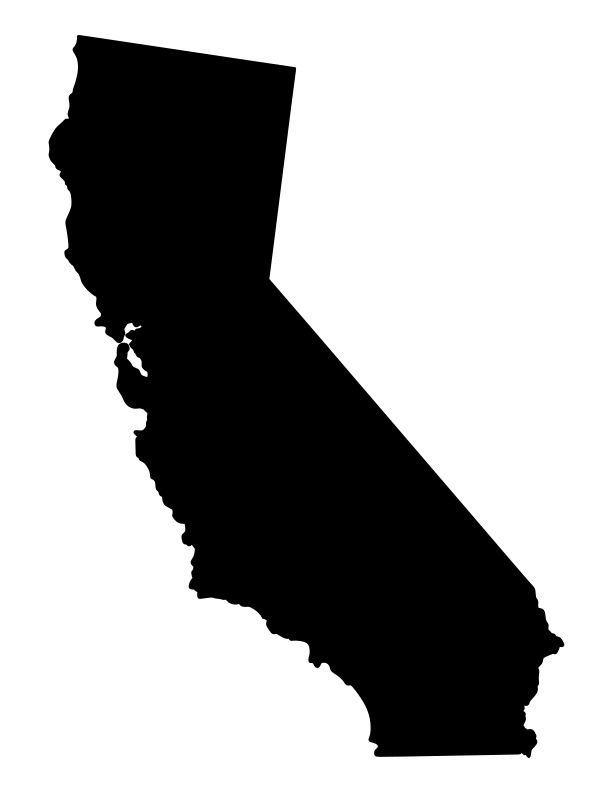
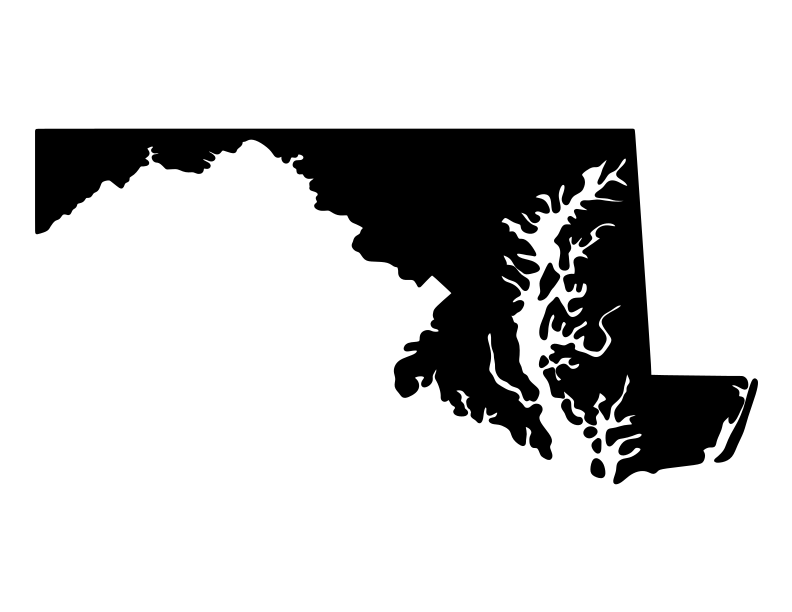
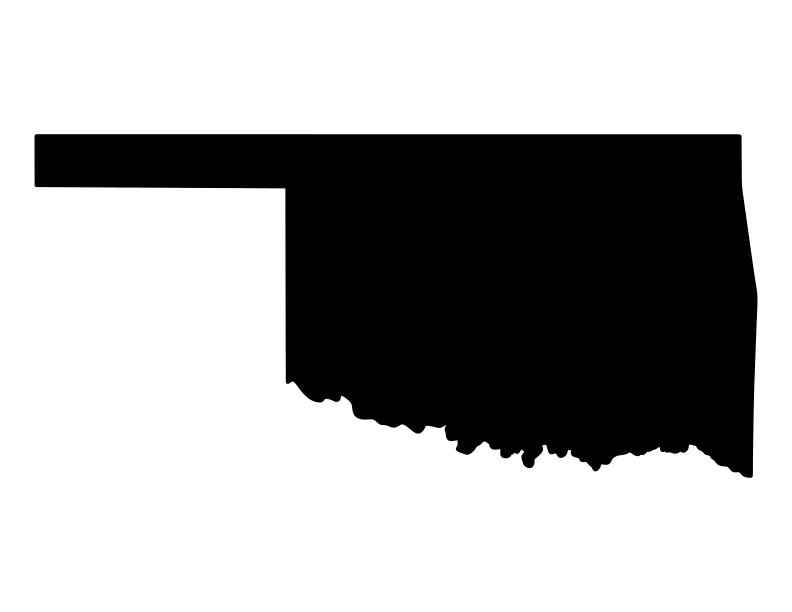
Bans are in place or scheduled to be in California, Connecticut, Montana, New Jersey, New York, Indiana, Iowa, Maine, and Oklahoma. Other states, including Washington, Idaho, Michigan, Nevada, Louisiana, and Tennessee, are where sweepstakes casinos are illegal through existing law or enforcement rather than a new statute.
Is a sweepstakes casino considered gambling?
That's the unsettled question at the center of the debate. Operators say no, since the free entry removes the "consideration" that defines gambling; critics say it functions as gambling in practice. Legally it depends on the state and on how courts rule.
What happens to my balance if my state bans sweepstakes casinos?
Operators usually stop serving a state once a ban takes effect. Most ban terms let the operator close accounts there, with unredeemed Sweeps Coins often forfeited by the player. For this reason, if a ban with a future date is announced, redeem your balances well before the effective date.
Can I get in trouble for playing in a restricted state?
For nearly all players the risk is losing your account, not a legal charge, since enforcement targets operators, not players. Expect suspension, denied redemptions, or forfeited balances, especially if you use a VPN. Washington is the exception in which harsher consequences have occurred for players.
What's the minimum age to play at a sweepstakes casino?
Usually 18, sometimes 21. The minimum age for these sites is set by the operator rather than being a national rule, since many states set no specific minimum themselves. Confirm the platform's requirements before signing up.
Are sweepstakes casino winnings taxed?
Yes, they're taxable as income at the federal level, even without a tax form being issued by the platform. Sweeps operators generally issue a 1099-MISC once redemptions pass the annual threshold ($2,000 for 2026), while an automatic 24% withholding can apply at $5,000+. State tax depends on where you live.
How can I tell if a sweepstakes casino is operating legally and legitimately?
Key green flags include an easy-to-find free entry option, clearly separated Gold and Sweeps Coins, transparent terms with a restricted-states list, and strict age and identity verification before payouts. Hidden free entry or vagueness about which states a site serves are red flags.
Jack Garry is a Los Angeles-based online casino writer and editor with five years of experience reviewing platforms, covering regulated gambling markets, and helping players make informed decisions. Raised in Las Vegas and steeped in casino culture from an early age, Jack brings a perspective to his writing that goes beyond the research.