


Whether it’s baseball cards or Pokémon, every card collector knows that the best part of opening a fresh pack is that rush of adrenaline as you hope to discover something rare. This combination of a hobby you love with the thrill of the unknown is one of the key reasons card collecting has become so popular in recent years.
It’s also why Brady Simpson, a PhD student and researcher at the University of Calgary, began investigating gambling-like behaviors in trading-card collecting. In his research at the university’s Haskayne School of Business, he explores influencer and community marketing at the intersection between hobbies such as card collecting and gambling.
Simpson’s observations indicate that entertainment like hobbies and card collecting, which aren’t categorized as gambling, still have gambling-like characteristics, such as repeated purchases, chance-based outcomes, and the pursuit of valuable rewards for risk-taking.
I'm currently fascinated by the idea that introducing gambling into different kinds of hobbies, such as collecting cards, coins, or really anything else,” Simpson told casino.com. “This could take away from the experience of the hobby, but on the other hand, if done responsibly, it can add a new dimension to the experience by building new communities.
 Brady Simpson
The Thrill of the Chase: Pokémon and Rare Collectibles
Simpson’s research is connected to a fundamental fact that is part of the life of every card collector: When you buy a pack of cards, it is sealed, and there’s no way for you to know what’s inside. Every pack of Pokémon or sports trading cards you buy could contain worthless collectibles or that once-in-a-lifetime rare discovery you never forget. Either because it holds sentimental attachment, financial value, or, in many cases, both.
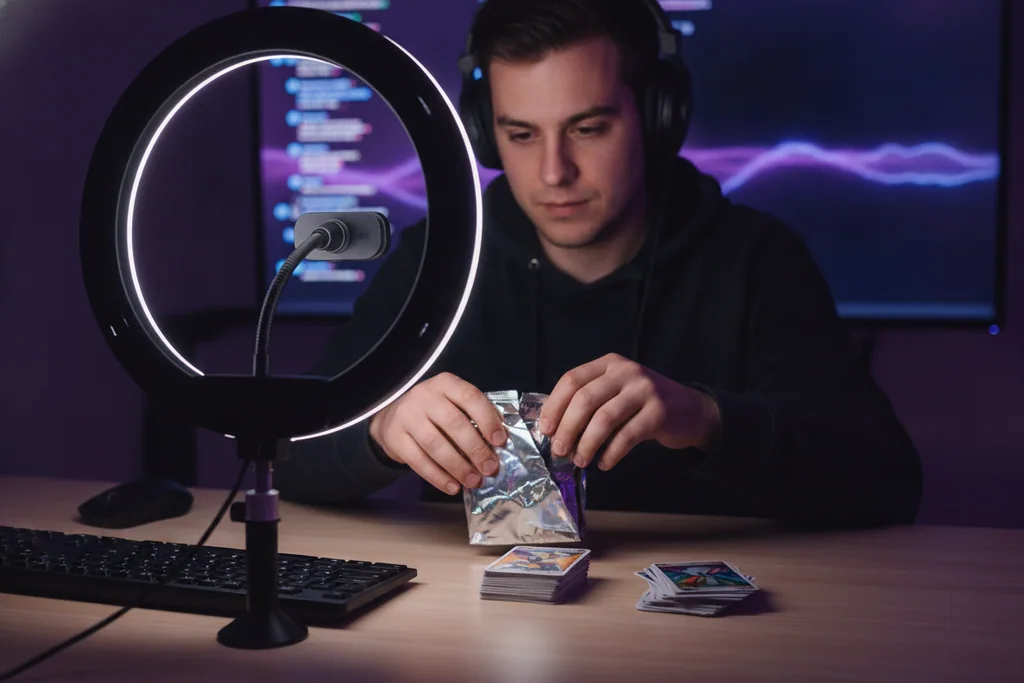
It’s this unknown and the aspect of chance that Simpson says shares characteristics with gambling. He was interviewed in a recent article, where he discusses the recent explosion of Pokémon and other collectible cards alongside the trend of “card breaking”. It is a widespread practice common on platforms like Whatnot, where collectors pay in advance, before the pack is opened, for a ‘slot’, which entitles them to a share of whatever cards are in the pack. The packs are opened, and the cards are revealed by the host (i.e., “breaker”) during a livestream.
Some box breaks cost thousands of dollars to buy into. Others only pay out if your purchased share is worth above some minimum amount. If your cards are below that minimum, you get nothing. As Simpson points out, collectors who get nothing have literally paid for the chance to win something rather than getting a guaranteed collectible. Unlike when you buy a pack, which leaves you with cards, even if they are of nominal value.
Major sites like WhatNot have begun to crack down on card breakers who use their platforms to varying degrees. Most would require them to at least send all cards to participants, even if the cards drawn have generated a loss or are of low value. Still, other platforms have no rules about mailing cards. Informal breaking events via Discord or private YouTube livestreams remain unregulated, leaving participants vulnerable to potential scams and possible harm.
While risks and policies vary across platforms and sub-communities, these kinds of card-breaking activities and other trends among hobbyists illustrate the growing connection between collecting and chance. As things move closer to risking a thing of value for the chance to obtain higher value, they get closer to gambling by definition.
Inside the World of Card Breaking
The excitement, the repeat purchases, the risk vs. reward, and the real-time community aspect of card breaking all captured Brady Simpson’s attention as gambling-related behaviors in hobby collecting.
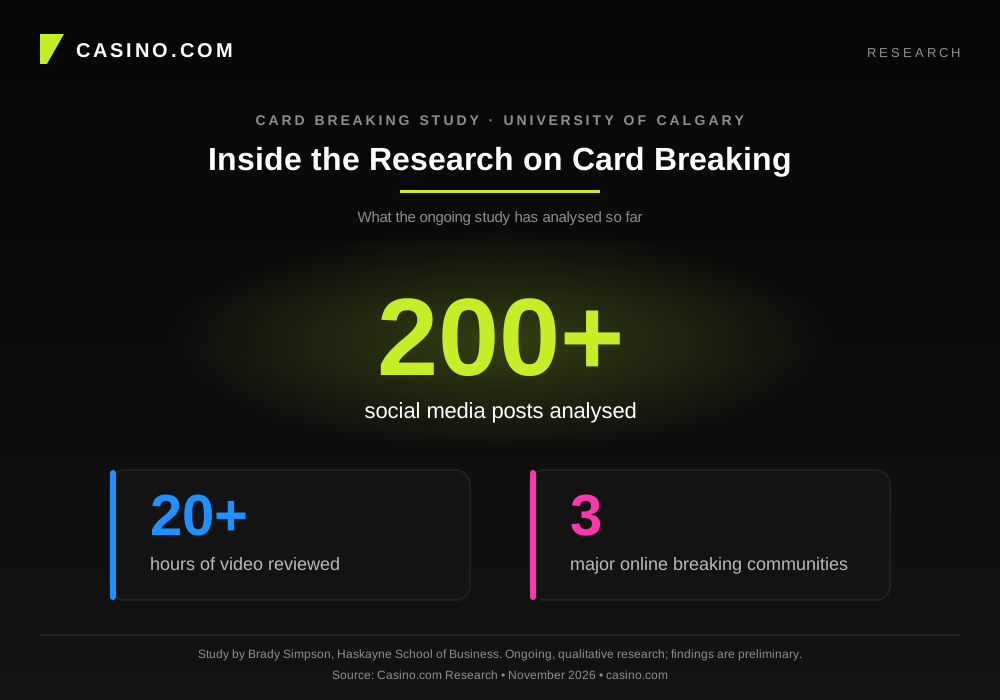
Having long been interested in the overlap between gambling and other forms of entertainment, Simpson’s study, The Underground World of Influencer Trading Card Gambling or “Breaking,” focuses on this growing trend. The study, which is still ongoing, analyses more than 200 social media posts, 20+ hours of video, and three major online breaking communities.
Brady Simpson’s research is still in progress, but for now, he has found that breaking is much more than participants paying for a portion of sealed trading-card products that a host opens online in real time; in fact, breaking is much bigger than that. It is an entire ecosystem of influencers, some of whom also promote sportsbooks, casino products, and other forms of gambling, and card collectors who buy into breaks, knowing that they have even less control over the outcome than they would buying entire packs themselves. Many participate with the knowledge that although they invest money to buy a “slot,” they might never see an actual card in return, let alone draw a valuable card worth more than they put in.
The psychology and social element also stood out to Simpson. The social encouragement between collectors in the live chat and the relationship formed between the host and their chat community captured his attention. The excitement these connections cause, like when a host pulls a big card for another chatter, is “often palpable,” says Simpson.
I like to think of influencers as someone who's a little more distant from the collector than a close friend, but a lot closer than a major celebrity,” Simpson said. “We can see ourselves in these people; they are more like us. When an influencer makes a recommendation, we might trust it more.”
Taken together, Simpson identifies the atmosphere of a card-breaking livestream and the psychology behind it as a new paradigm of entertainment, which is very different than the type of collecting hobbyists engaged in decades ago. However, he notes that not all breaks are the same and that he is currently still gathering data and formulating his conclusions.
What Simpson’s Observations so far Say About Consumer Behavior
While people may disagree about whether card breaking constitutes gambling (legally, it does not), Simpson’s observations point to trends in consumer behavior and psychological questions that need to be researched further. Specifically, the study addresses the broader question of why consumers repeatedly engage in activities with uncertain outcomes.
Many products today are more than just products. They are lotteries with uncertain rewards that require social media engagement and repeat spending. Another classic example of this trend, which Simpson mentions, is loot boxes in video games, which sell randomized rewards for real money. Sometimes, however, these rewards are entirely virtual and cannot be traded for money.
When you add in the role of influencers and social media platforms geared towards community engagement and hype cycles, like the TikTok LIVE feature or WhatNot, products become entertainment and a part of the attention economy as well as financial.
According to Simpson, the role of anticipation and the possibility of an unusually valuable reward is what’s driving this trend. As the chance of getting a big prize becomes more important than the actual item itself, the experience of opening or revealing cards becomes something worth paying for rather than the old days when you knew you were at least guaranteed a collectible (even if it was worthless).
Anecdotally, I'm seeing many aspects of my daily life being gamified to some extent.” Simpson illustrates. “One good example is the "mystery box" mechanics in toys and video games, which I’m seeing more and more of lately. I'm very intrigued by the idea that introducing gambling-like components into different kinds of hobbies, such as collecting cards, coins, or really anything else.”
The powerful feeling of anticipation also creates a cycle. Namely, if a person participates in breaks for Pokémon packs and sports-card boxes. They may rationalize additional purchases after losing money on a bad break because there’s always a chance the next one will contain something valuable.
Spelled out like this, it’s easy to assume that all collectors are actually just gambling. However, it’s worth noting that Simpson's qualitative study only identified themes within certain collecting communities. It did not measure how common these gambling-like behaviors were among all collectors.
The Responsibility of Influencers
A key element that emerged in Simpson’s research was the role influencers play in hobby communities, particularly in the card-breaking space. As a former video game streamer, he knows firsthand how an engaging online personality can build a community with chatters. And he shared his own experience with us.
I’m not a large-scale streamer. But as I started gaining a following in the thousands, I was approached by gambling advertisers about promotional opportunities. The biggest surprise to me was that the gambling sponsorships typically paid more. In most cases, quite a bit more. I have friends who may not be gamblers or don't necessarily like exposing their audience to gambling content because it's out of their niche or they feel it could impact their audience negatively, but the offer does make you stop and consider where your priorities are.”
In the context of card breaking, a strong influencer can transform trading-card purchases into social entertainment. Influencers build hype with their card reveals and foster a sense of community among traders. Specific things, like public celebration of high-value cards and shoutouts to chatters for good draws, may influence future purchases and introduce parasocial relationships between livestream hosts and regular viewers.
“I think it can go both ways,” Simpson says about influencers and gamification. “While it builds new communities and adds a new dimension of excitement, it could also have a negative impact on the hobby if not done safely and responsibly.
Simpson’s research finds that influencers can create a highly persuasive environment in which peer pressure and community-seeking behavior are common. These dynamics are clear when community members are socially celebrated and encouraged to continue to purchase more. Simpson highlights these potentially concerning issues, as younger audiences may be particularly exposed to gambling-like mechanics through familiar collectible brands like Pokémon.
“Influencers are perceived as more authentic than other spokespeople, especially by a devout audience. When an influencer makes a recommendation, we might trust it more. Therefore, there is a lot of responsibility in having an audience that trusts you and looks up to you,” Simpson says.
Conclusion: Collecting, Chance and the Future of the Hobby
The crossover between collecting and gambling doesn’t mean that you can’t enjoy the feeling of opening a pack of Pokémon cards. The appeal of collecting and the excitement of chance can coexist.
Simpson's research focuses on the extreme boundaries between ordinary collecting and gambling-like participation. Collecting is not inherently problematic, but as you approach those boundaries through things like randomized purchasing formats, there may be additional risks and behaviors to be aware of.
In Brady Simpson’s view, collecting cards can remain a hobby centered on physical items that people have enjoyed for generations. But he’s especially interested in areas where collecting intersects with community, chance and gambling-like mechanics. He also believes that influencers can do a lot to create a safe and sustainable environment.
“I've seen industry leaders actively seek out celebrities or professional athletes who have struggled with gambling to speak to others about gambling harms or spread awareness,” Simpson concludes. “I think influencers occupy an interesting space. If there is a group of people within the collector community that could benefit from hearing about responsible gambling, there is likely an influencer who can speak to that audience.”

Related News

Bulgaria moves to extend gambling ad ban to billboards and affiliates
Bulgarian MPs backed tighter gambling ad rules at first reading. The government’s draft would end affiliate activity and remove billboard exemptions.

Bally’s Intralot puts UK gaming duty hit at €68m before offsets
Bally’s Intralot offset nearly half of a €68m gross UK gaming duty hit over nine months and posted a pre-tax loss as financing costs rose.

Entain faces calls to close Romford during Safer Gambling Week
Shut Down Romford protested at Entain’s headquarters during Safer Gambling Week, urging it to close London’s last greyhound racing track.

UK rejects gambling ad ban and seeks wider online powers
The government has rejected a blanket gambling ad ban and agreed to seek a change to the law that limits ministers’ powers over online ads.

One in five young adults used France’s licensed gambling sites
France’s licensed betting and poker sites reached 21% of 18 to 24-year-olds in 2025 as the number of women playing online rose nearly 12%.
Resorts World NYC Expected to Launch Poker in December
This is another step in the former racino's transformation to a full-fledged retail casino after it was granted an operator’s license last December.
Alberta Launches Beyond the Bet Fund for Gambling Harm
Alberta marks its first Responsible Gambling Week as AiGC launches Beyond the Bet, funding gambling harm research, education, and prevention.
Florida AG Warns DraftKings Over Blackjack-Like 21 Rivals Game
Florida AG James Uthmeier took notice, saying that DraftKings would be “hearing from us soon” in a post on social media on Wednesday.
Lord Foster asks gambling regulator to look again at Pokémon packs
Lord Foster says a cash resale market warrants closer scrutiny of Pokémon cards. The Gambling Commission says resale alone is insufficient.

FDJ United seeks court order over casino ads using its brand
FDJ United says online casino ads copied its branding and kept appearing on Meta’s platforms after the group flagged similar posts in May.
Gambling Companies Back Utah’s Anti-Gambling AG, Who Is Suing Stake.US
On Wednesday, multiple outlets reported that Utah had expanded its gambling crackdown with a complaint targeting the companies behind Stake.US.
Alberta Clears Way for AGLC to Sell Play Alberta
Alberta's cabinet has approved a potential sale of Play Alberta, allowing AGLC to transfer player accounts to a new operator. No deal is in place yet.
Texas Sen. Would Pay $1,500 to Households Through Gambling Legalization
The proposal comes after Democrats flipped several crucial positions in the state government in the midterm elections, including Governor and Lieutenant Governor.

EU draft would bar paid loot boxes for under-18s
EU plans would keep paid loot boxes away from children and make gambling brands check that influencers follow advertising rules.

UK gambling trade bodies call for more apprenticeships
Trade bodies want gambling employers to make career routes more visible, as arcade operators warn that rising costs could limit what they spend on training.

Gambling industry questions timing and funding of new policy review
A new panel backed by gambling reform campaigner Derek Webb will examine gambling policy in Great Britain. Industry figures say the existing reforms should be evaluated first.

Kevin Craig calls for inquiry into Gambling Commission after election bet case
The former Labour candidate says publicity around the investigation cost him a seat in Parliament. The regulator closed the case in December 2024 without bringing charges.

AGCO Backs First Illegal Gambling Awareness Week
Ontario’s gaming regulator joined IAGR’s global campaign, promoting a free tool that shows whether a gambling site is licensed before players deposit.
Betinia Launches in Ontario as Soft2Bet’s Third Brand
Soft2Bet’s Betinia is now live in Ontario with an online casino and sportsbook, joining ToonieBet and Swiper as the operator’s third brand in the province.

Illegal bookmakers could take £500m in jump racing bets, BGC warns
The Betting and Gaming Council expects £10m to be staked with illegal bookmakers at Cheltenham’s November Meeting alone. The trade body has yet to publish its calculations.

Youth gambling falls in Great Britain as 5% report age-restricted play
The share of 11- to 17-year-olds who spent their own money on gambling fell from 31% in 2022 to 26% in 2026, according to the Gambling Commission.
Georgia Gov.-Elect Eyes Casino Legalization to Support Education
Bottoms’ campaign educational plan claimed that legal casinos could generate $300-500 million in annual tax revenue, which would support schooling efforts.
Sun International Shuts Flamingo Casino in Kimberley After 24 Years
Sun International has permanently closed Flamingo Casino in Kimberley after 24 years, following years of declining revenue and financial losses.
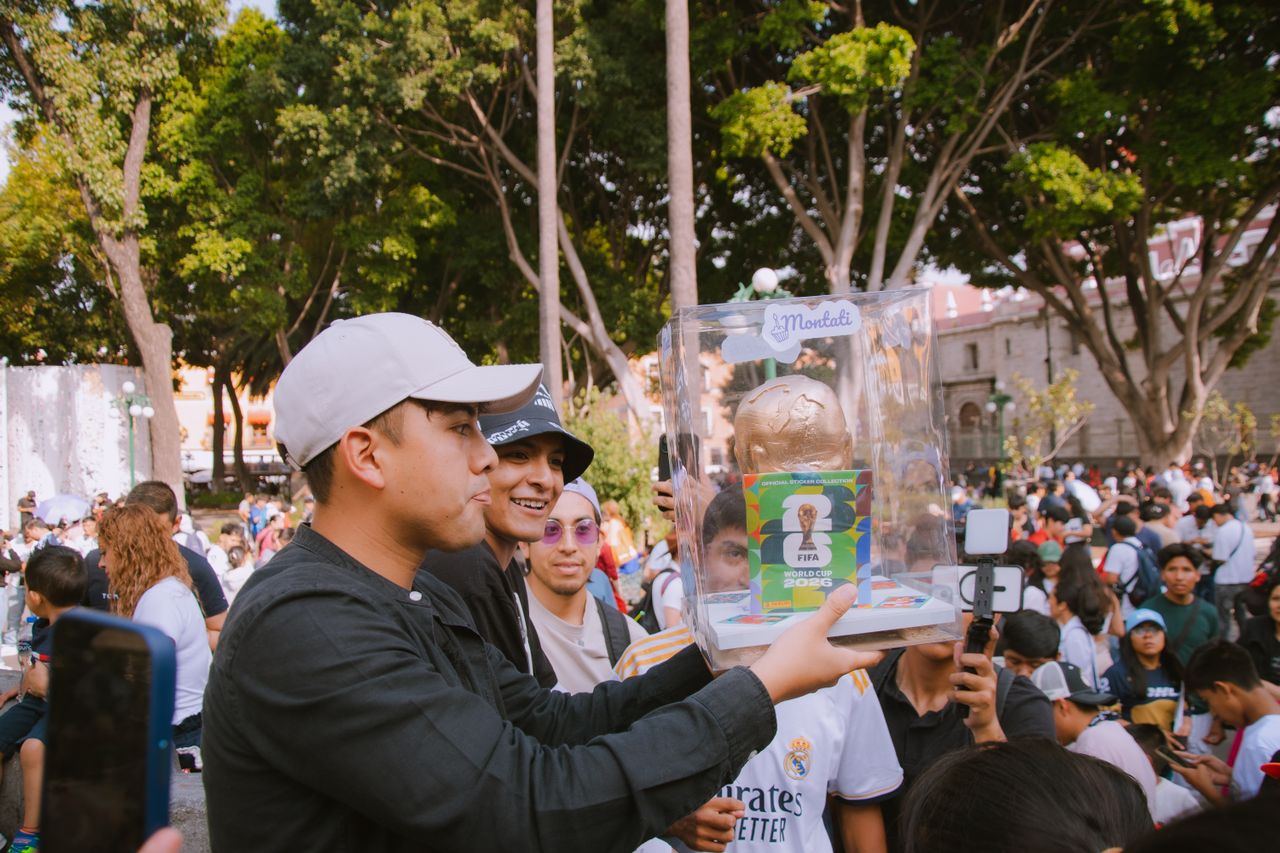
World Cup newcomers less sure they had the information they needed to bet
Six in ten first-time football bettors said they had enough information to place their World Cup bets, compared with nine in ten regulars.

Gambling Commission refers more than £40m in suspected criminal funds for possible freezing
The Gambling Commission is stepping up action against illegal operators by targeting their funds, payment routes, advertising and access to games.
Ohio Waiting for Acton to Take Office to Pursue iGaming
The chances of expanding the state’s casino-gaming market are believed to be higher with Acton taking the place of incumbent Mike DeWine (R).
Texas Rep. Pre-Files Resolution to Legalize Casinos, Sports Betting
Rep. Charlie Geren (R-99) pre-filed a joint resolution that would allow voters to decide on the fate of both casino gambling and sports betting.

Dominican Republic Confirms Only 7 Authorized Betting Sites
The Dominican Republic's new regulator, the DGJA, named seven authorized online betting operators and flagged about 81 unlicensed sites under review.

Atlantic City Mayor Plans to Diversify Economy from Casinos
Small’s belief is that it could interest middle-class buyers, many of whom have been priced out of rising costs in more prominent areas across the city.
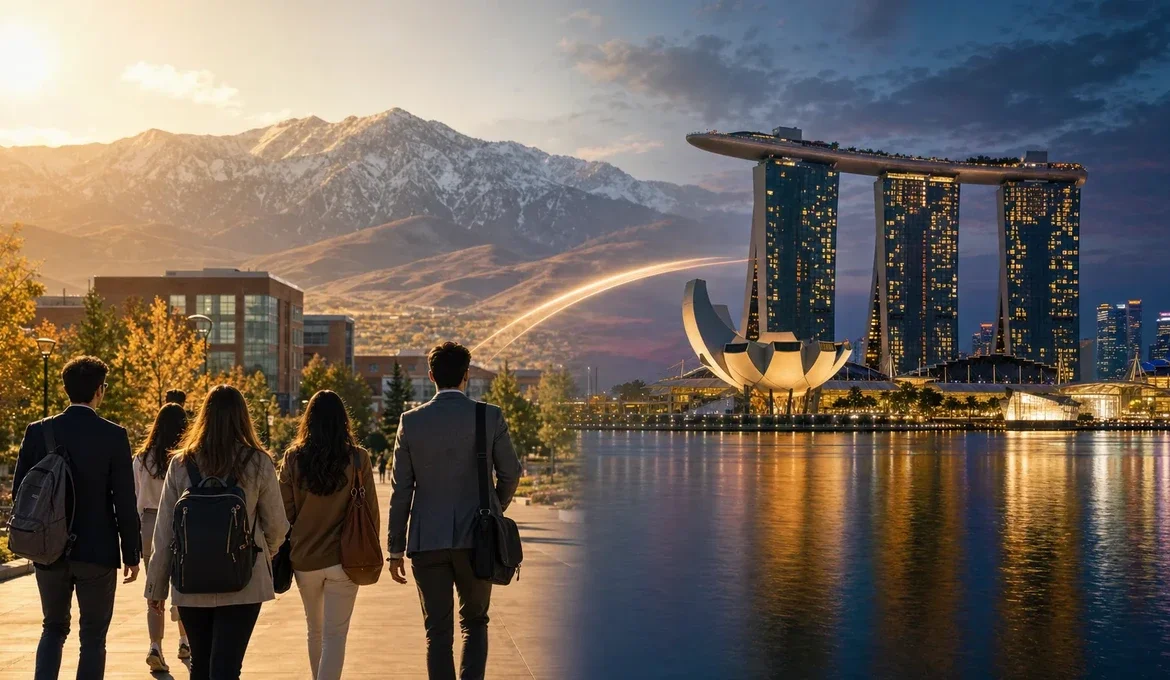
From Reno to Singapore: UNR Training the Next Generation of Gaming Industry Leaders
In January 2027, students from the University of Nevada, Reno will swap the desert for Singapore’s Marina Bay Sands. Casino.com spoke to Jim McClenahan about how the Nevada Global Business program takes the classroom into the world’s boardrooms.
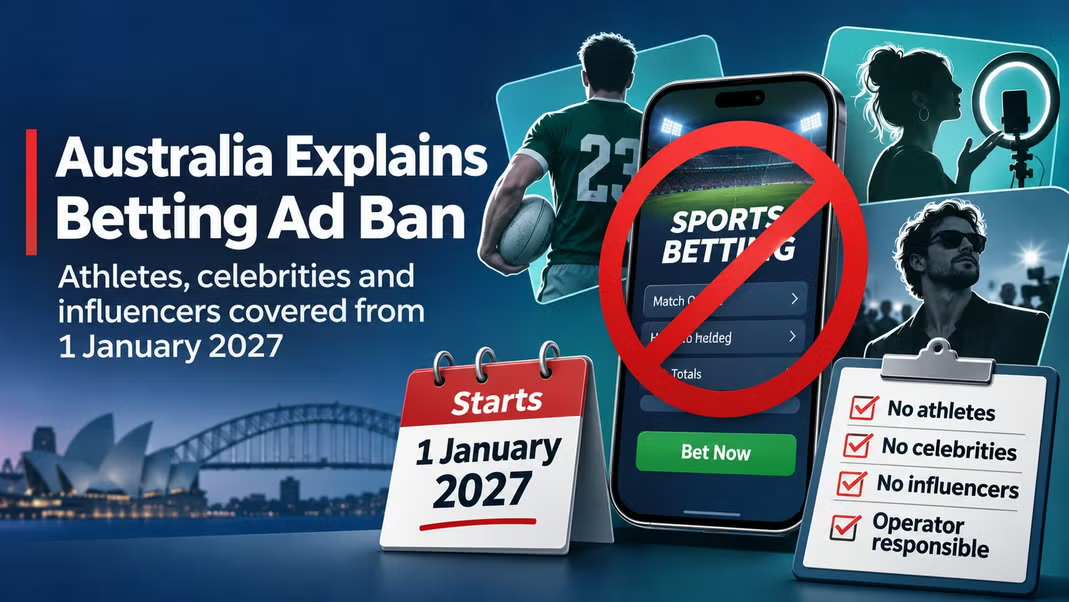
ACMA Publishes Guidance on Australia's Betting Ad Ban for Athletes and Influencers
Australia's betting ad rules change soon. From 1 January 2027, licensed operators cannot use well-known people to promote wagering. Last month, the Australian Communications and Media Authority (ACMA) explained how it will apply the ban. Here is what the guidance says.
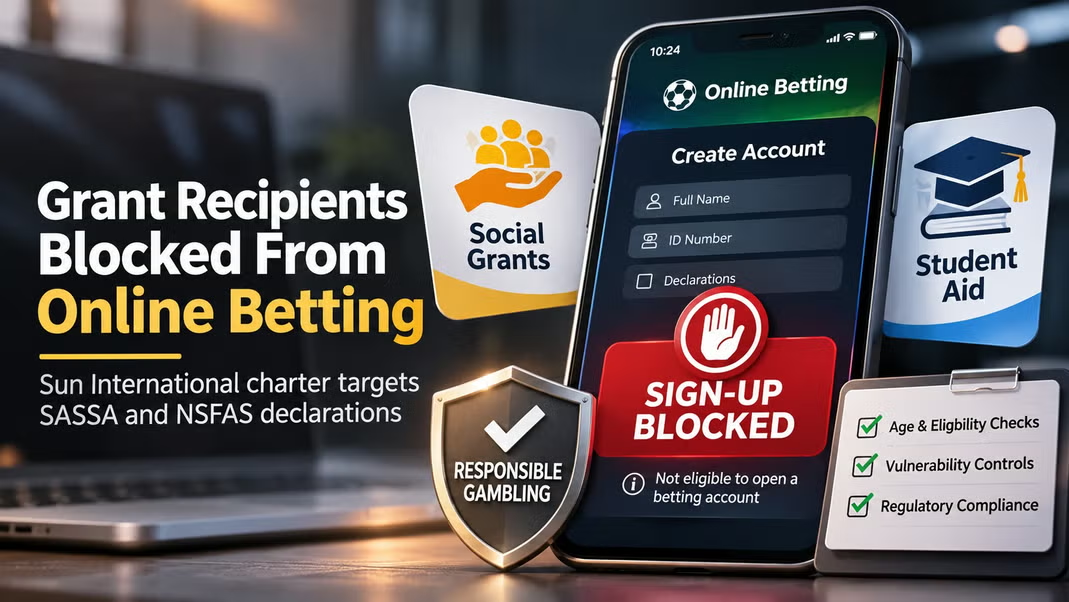
Sun International Moves to Block Grant Recipients from Online Betting
Sun International will stop customers who declare a social grant or student aid from opening Sunbet accounts. The company admits it cannot check those declarations.
ProgressPlay CEO Receives Personal Warning Over Gambling Compliance Failures
The UK Gambling Commission has issued a formal warning to ProgressPlay chief executive Itai Loewenstein after finding shortcomings in his oversight of anti-money laundering and customer protection requirements.