1
.webp "Rajabets Casino")

Live cricket stream
Hindi/Telugu UI, UPI cashouts


Live cricket stream
Hindi/Telugu UI, UPI cashouts



|
Feature |
Mostbet |
Casino Khajana |
BC.Game |
Rajabets |
|
Game Show Library |
Ezugi, Evolution, Pragmatic Play |
Dedicated section available |
Evolution Gaming titles |
Evolution + Ezugi titles |
|
Streaming Quality |
HD quality on selected games |
HD |
HD |
HD |
|
Welcome Bonus |
125% up to ₹34,000 + 250 Free Spins |
200% up to ₹100,000 + ₹500 Free Bets |
120% up to ₹3,58,000 + 400 Free Spins |
200% up to ₹1,00,000 |
|
UPI Support |
Yes |
Yes |
Yes |
Yes |
|
Min. Deposit |
₹1,000 |
₹500 |
₹150 |
₹150 |
|
Wagering Requirement |
60x for bonus 40x for Free Spins |
35x |
40x |
40x |
|
Live Casino Cashback |
5% to 10% Cashback |
VIP Cashback |
VIP rakeback |
10% to 25% instant cashback |

Game Show Library
Mostbet
Ezugi, Evolution, Pragmatic Play
Casino Khajana
Dedicated section available
BC.Game
Evolution Gaming titles
Rajabets
Evolution + Ezugi titles

Streaming Quality
Mostbet
HD quality on selected games
Casino Khajana
HD
BC.Game
HD
Rajabets
HD

Welcome Bonus
Mostbet
125% up to ₹34,000 + 250 Free Spins
Casino Khajana
200% up to ₹100,000 + ₹500 Free Bets
BC.Game
120% up to ₹3,58,000 + 400 Free Spins
Rajabets
200% up to ₹1,00,000

UPI Support
Mostbet
Yes
Casino Khajana
Yes
BC.Game
Yes
Rajabets
Yes

Min. Deposit
Mostbet
₹1,000
Casino Khajana
₹500
BC.Game
₹150
Rajabets
₹150

Wagering Requirement
Mostbet
60x for bonus
40x for Free Spins
Casino Khajana
35x
BC.Game
40x
Rajabets
40x

Live Casino Cashback
Mostbet
5% to 10% Cashback
Casino Khajana
VIP Cashback
BC.Game
VIP rakeback
Rajabets
10% to 25% instant cashback

Data note: Bonus figures, wagering requirements, and game show library details for Mostbet and Parimatch are based on publicly available information at the time of writing. Confirm current offers directly on each site before depositing.

Mostbet offers a live casino section featuring Evolution Gaming titles, including Crazy Time and Monopoly Live. The platform supports UPI deposits and withdrawals in INR with no conversion fees for Indian players. Mobile performance is optimised for both Android and iOS, with fast loading on 4G connections.



Casino Khajana has a dedicated section featuring live game shows from Evolution Gaming and Microgaming Live. Apart from regular titles like Crazy Time, Lightning Dice, Dream Catcher, etc., you can also find some newly launched titles like Balloon Race, Marble Race, Crazy Coin Flip, and more.
Best for: 6000+ titles to explore and play from various game categories
Worth noting: The welcome package is divided and given on the first three deposits.

BC.Game covers the core Evolution Gaming game show catalogue alongside its extensive crypto-first banking options. With 120+ deposit methods, including UPI, PhonePe and GPay, it is the most flexible platform for players who prefer digital currencies alongside INR.
.webp "Rajabets Casino")
RajaBets carries Evolution Gaming and Ezugi titles across its live casino, giving it one of the broader game show selections of the four platforms. The ₹150 minimum deposit makes it the most accessible option for players testing game shows for the first time.
|
Title |
Provider |
Max Multiplier |
Volatility |
Best For |
|
Crazy Time |
Evolution Gaming |
20,000x |
High |
Big multiplier chasers |
|
Monopoly Live |
Evolution Gaming |
20,000x |
High |
Bonus round entertainment |
|
Mega Ball |
Evolution Gaming |
100x |
Very High |
Lottery-style players |
|
Dream Catcher |
Evolution Gaming |
40x |
Low |
Beginners, low-stakes play |
|
Lightning Roulette |
Evolution Gaming |
500x |
High |
Roulette players wanting multipliers |

Crazy Time
Provider
Evolution Gaming
Max Multiplier
20,000x
Volatility
High
Best For
Big multiplier chasers

Monopoly Live
Provider
Evolution Gaming
Max Multiplier
20,000x
Volatility
High
Best For
Bonus round entertainment

Mega Ball
Provider
Evolution Gaming
Max Multiplier
100x
Volatility
Very High
Best For
Lottery-style players

Dream Catcher
Provider
Evolution Gaming
Max Multiplier
40x
Volatility
Low
Best For
Beginners, low-stakes play

Lightning Roulette
Provider
Evolution Gaming
Max Multiplier
500x
Volatility
High
Best For
Roulette players wanting multipliers
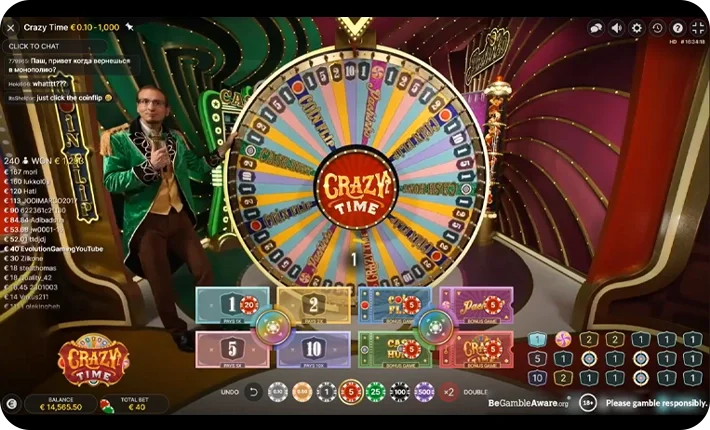
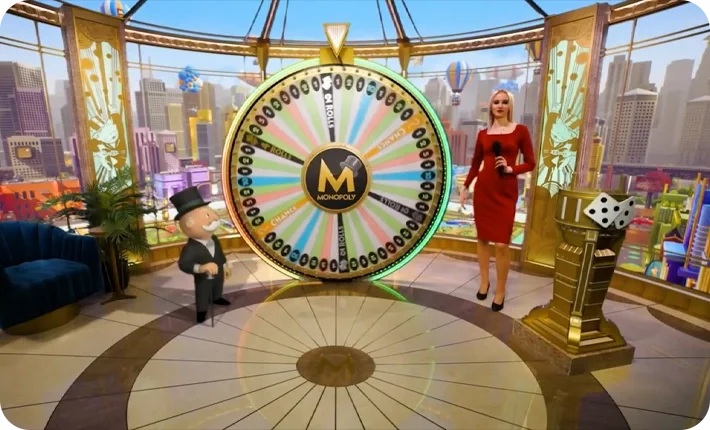
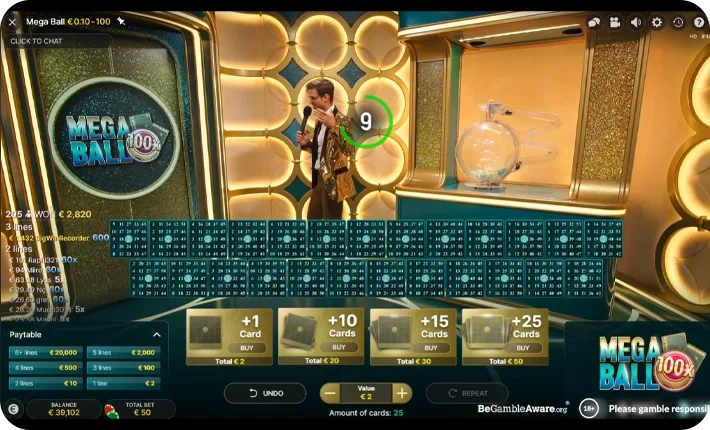
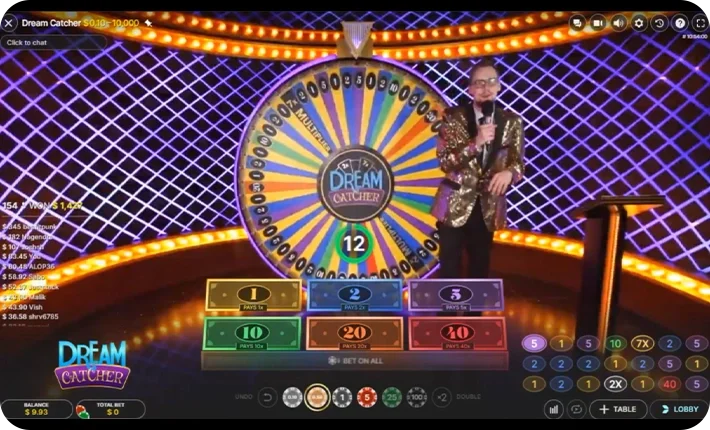
Each game show displays the current betting window, a countdown timer showing when bets close, and a recent results panel. The presenter guides every round in real time. No prior experience is needed to participate.
Important: Demo mode is not available for live game shows. A funded account is required to join any live game, as these run continuously with other real players in real time.

Low volatility: number segments
Betting on numbered segments (1, 2, 5, 10 in Crazy Time or Dream Catcher) produces frequent, smaller wins. These bets pay at face value and hit regularly throughout a session. For players on a limited budget or those who want to extend session time, number segment bets are the more sustainable approach.

High volatility: bonus segments
Betting on bonus segments (Coin Flip, Cash Hunt, Pachinko, Crazy Time in Crazy Time; 2 Rolls and 4 Rolls in Monopoly Live) produces infrequent wins but with significantly higher multiplier potential. The trade-off is clear: you will lose more rounds between hits, and a limited session budget can be exhausted quickly before a bonus round lands.

What the math looks like in practice
In Crazy Time, the Crazy Time bonus segment appears on the wheel twice out of 54 segments, giving it a hit frequency of roughly 3.7% per round. At 40 rounds per hour, you can expect to see it land approximately once or twice per hour on average. Landing it does not guarantee a large multiplier. The bonus round itself has a range of outcomes.

Bankroll guidance
Set a loss limit before opening any game show and treat it as a hard stop. Game shows run at 40 or more rounds per hour, which means session budgets move faster than at a standard table game. Decide your maximum loss before the first round, not during the session.